
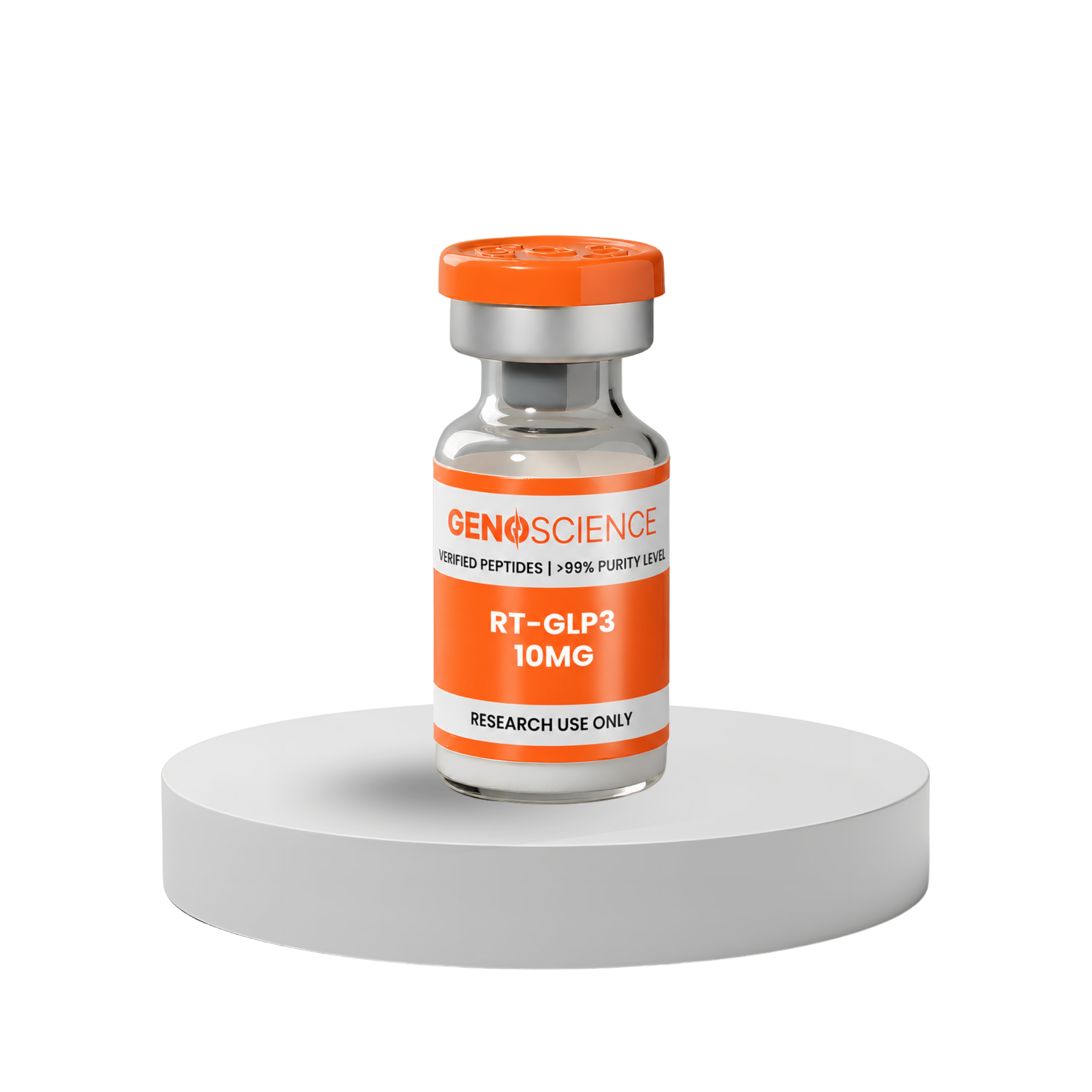


$65.00 – $150.00Price range: $65.00 through $150.00
Compound: RT-GLP3 Triple-Receptor Research Peptide
Amount: 10mg, 20mg or 30mg per vial, depending on the selected option
Format: Lyophilized Powder
Chemical Classification: Synthetic Triple-Agonist Peptide
Research Targets: Glucose-Dependent Insulinotropic Polypeptide Receptor (GIPR), Glucagon-Like Peptide-1 Receptor (GLP-1R), and Glucagon Receptor (GCGR)
Chemical Profile: RT-GLP3 is a synthetic peptide associated with research into combined activation of three related receptor pathways. Its receptor profile is studied in comparative pharmacology, receptor-binding experiments and intracellular signaling assays, including investigations of cAMP-mediated signaling. Its triple-target profile distinguishes it from single- and dual-receptor reference ligands.
Research Use Only. Not for human or veterinary use.
Monthly subscription four vials of 10mg for a total of 40mg was $400 now $185
RT-GLP3 is a synthetic, multi-receptor research peptide classified by its activity at three distinct receptors: GIPR, GLP-1R and GCGR. These receptors belong to the broader family of G-protein-coupled receptors and participate in related signaling networks. The term triple agonist describes the compound’s receptor-target profile, rather than a combination of three separately mixed peptides.
The research literature discusses how a modified peptide backbone can be engineered to recognize more than one receptor family. RT-GLP3 is associated with a modified GIP-derived peptide framework incorporating a fatty diacid modification. Receptor coverage and chemical modifications are the main distinguishing features of the material.
| Specification | Details |
|---|---|
| Compound | RT-GLP3 |
| Classification | Synthetic Triple-Receptor Agonist Peptide |
| Receptor Targets | GIPR, GLP-1R and GCGR |
| Research Category | Multi-Receptor Pharmacology |
| Structural Description | Modified GIP-based peptide framework with fatty diacid conjugation |
| Product Form | Lyophilized Powder |
| Listed Amounts | 10mg, 20mg and 30mg |
| Intended Use | Laboratory Research Only |
Unlike a single-target peptide, a triple-receptor ligand allows researchers to study multiple receptor interactions within the same molecular design.
Semaglutide is a reference compound for GLP-1R agonism, while tirzepatide engages both GIPR and GLP-1R. RT-GLP3 adds GCGR as a third receptor target. These categories are useful for organizing laboratory comparisons, but exact assay responses depend on the compounds and test systems used.
A principal research application of RT-GLP3 is the examination of ligand activity across GIPR, GLP-1R and GCGR. These targets share certain signaling characteristics but are not biologically identical. A single molecular probe with three receptor activities can be compared with ligands that engage one or two targets.
Laboratory studies may evaluate receptor-specific potency, response patterns and differences in signaling when the same ligand is exposed to receptor-expressing cell systems. The triple-agonist model is particularly useful for understanding how molecular engineering expands receptor coverage.
GIPR and GLP-1R are widely investigated in incretin receptor pharmacology. Both are commonly studied using receptor binding and intracellular signaling assays.
Researchers may compare the effect of a dual- or triple-agonist ligand at each receptor with the response produced by a reference agonist. Such comparisons help distinguish differences in receptor recognition, measured response and signaling selectivity without assuming that the receptors behave identically.
GCGR is the third target in the triple-receptor model. Its inclusion distinguishes RT-GLP3-related research from experiments focused only on GIPR and GLP-1R.
Glucagon receptor signaling can be characterized in isolated receptor systems, including measurements of second-messenger activity. In a multi-receptor study, GCGR is typically evaluated separately so that its contribution to an overall signaling profile can be analyzed without conflating the three individual receptors.
A common research readout for GIPR, GLP-1R and GCGR is the production of cyclic adenosine monophosphate, or cAMP. This second messenger is associated with G-protein signaling following receptor activation.
Researchers use cAMP-response assays to compare how a compound interacts with different receptors, including response magnitude and concentration-response characteristics. A receptor assay reports a defined cellular measurement. It does not automatically describe an outcome in a whole organism.
Peptide structure affects the way a ligand recognizes and activates its receptors. Scientific research on triple agonists includes investigation of sequence changes, fatty-acid conjugation, receptor contact regions and the balance of activity at different receptor subtypes.
These structural questions are important because the same peptide backbone may interact differently with GIPR, GLP-1R and GCGR. Studying a multi-target ligand provides a framework for understanding how modifications influence receptor specificity.
Researchers can compare a GLP-1R-only ligand, a GIPR/GLP-1R dual agonist and a GIPR/GLP-1R/GCGR triple agonist using appropriately matched assays. This design helps organize research questions about receptor coverage, signal amplitude and pathway selectivity.
Interpretation depends on the identity of the ligand, the receptor system, assay method and reference used for comparison. Differences reported in one experimental platform may not be identical in another platform.
Certificates of Analysis (COAs) are posted on the product page when available. To request documentation for a specific lot, contact the Genoscience team with the lot number.
Keep unopened lyophilized research material at −20 °C in a dry environment protected from light and moisture. Allow the sealed vial to reach room temperature before opening to reduce condensation.
Handle using appropriate laboratory protective equipment and standard research-facility procedures.
Research Use Only: This product is intended strictly for scientific laboratory research and development.
Not for Human or Veterinary Use: Not intended for human consumption, administration or veterinary applications.
Not an Approved Medicine: This material is not marketed as an FDA-approved drug or treatment.
Research Limitations: Receptor binding and signaling studies describe experimental results and do not establish clinical safety or efficacy for this research product.
RT-GLP3 is a synthetic research peptide associated with three receptor targets: GIPR, GLP-1R and GCGR. It is studied in the context of multi-receptor pharmacology and signaling research.
A triple agonist is a single compound designed to interact with three receptor targets. In RT-GLP3 research, the three named targets are the GIP, GLP-1 and glucagon receptors.
Semaglutide is associated with GLP-1R agonism. Tirzepatide is a dual agonist of GIPR and GLP-1R. RT-GLP3 includes GCGR as a third receptor target.
Genoscience lists RT-GLP3 in 10mg, 20mg and 30mg options. The selected product option determines the amount in the vial.
Research includes receptor binding, cAMP signaling, structure-activity investigations and comparisons between single-, dual- and triple-receptor reference ligands.
When available, the COA for RT-GLP3 10mg / 20mg / 30mg can be found on the product page. You may also contact Genoscience to request a COA or ask about documentation availability for a specific lot.
No. Genoscience sells RT-GLP3 strictly for laboratory research purposes. It is not intended for human or veterinary use.
$60.00 Original price was: $60.00.$40.00Current price is: $40.00.
$70.00 – $130.00Price range: $70.00 through $130.00
$350.00 Original price was: $350.00.$220.00Current price is: $220.00.
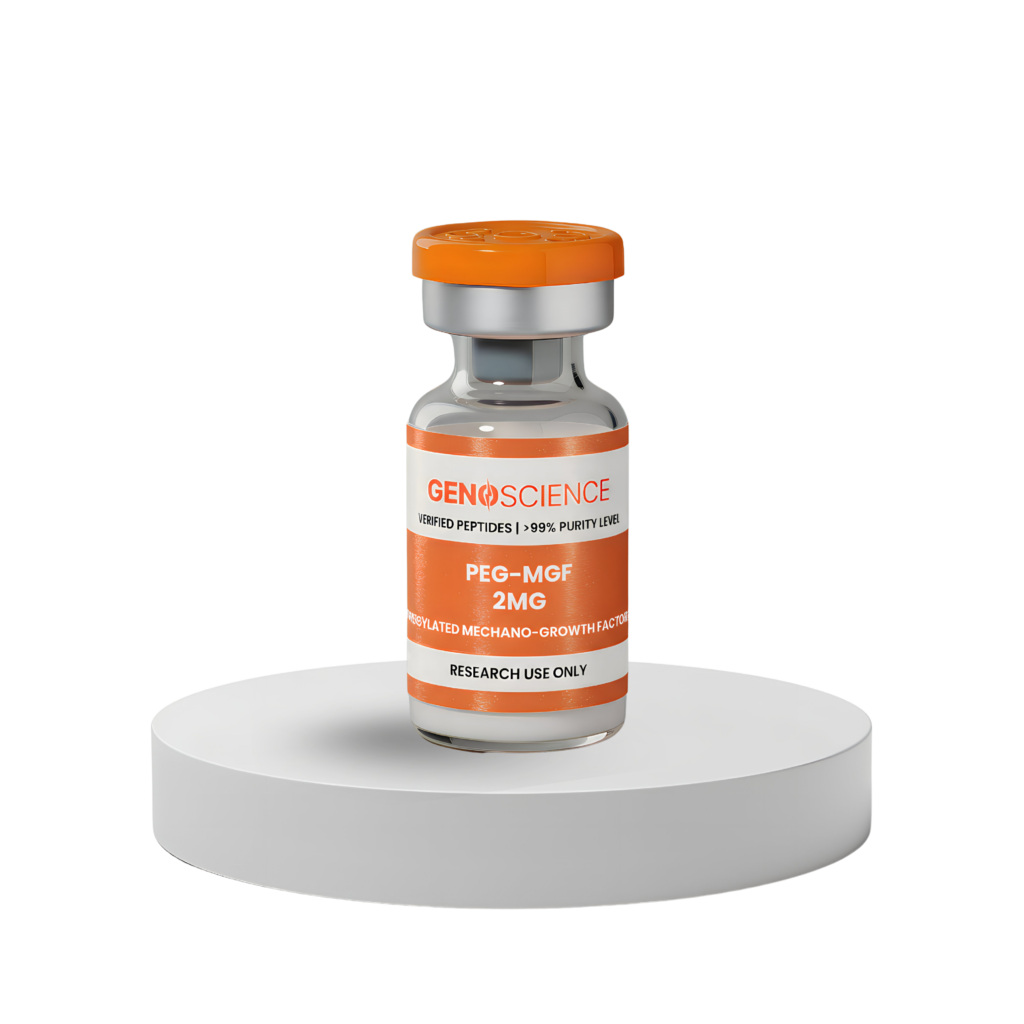
$45.00 Original price was: $45.00.$30.00Current price is: $30.00.
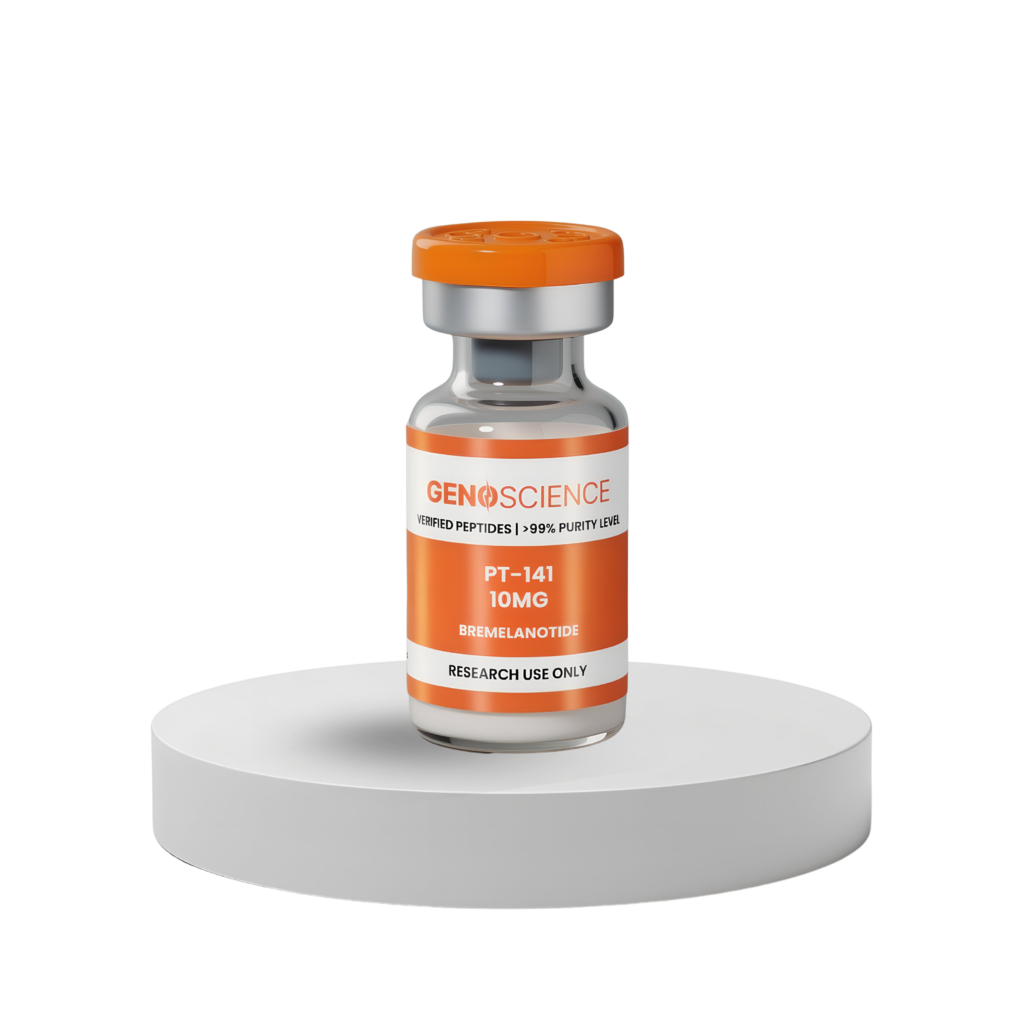
$65.00 Original price was: $65.00.$40.00Current price is: $40.00.

$150.00 Original price was: $150.00.$115.00Current price is: $115.00.
You must be at least 21 years old to enter Genoscience and review products intended for laboratory research use only.
Products are not for human or veterinary use, not for use in diagnostic procedures, and have not been evaluated by the U.S. Food and Drug Administration.