


$60.00 – $130.00Price range: $60.00 through $130.00
Compound: Tirzepatide (GIP/GLP-1 Dual-Receptor Agonist)
Amount: 10mg, 20mg or 30mg per vial, depending on the selected option
Format: Lyophilized Powder
Chemical Classification: Acylated Synthetic Peptide Analog
Research Targets: Glucose-Dependent Insulinotropic Polypeptide Receptor (GIPR) and Glucagon-Like Peptide-1 Receptor (GLP-1R)
Chemical Profile: Tirzepatide is a 39-amino-acid synthetic peptide developed to interact with both the GIP and GLP-1 receptors. Its GIP-derived backbone and attached fatty diacid are studied in research on peptide structure, dual-receptor signaling and ligand–receptor interactions. The compound is a reference material in comparative incretin pharmacology.
Research Use Only. Not for human or veterinary use.
Tirzepatide is a synthetic peptide designed to act at two receptors: the glucose-dependent insulinotropic polypeptide receptor (GIPR) and the glucagon-like peptide-1 receptor (GLP-1R). Both are G-protein-coupled receptors studied in incretin pharmacology.
Its 39-amino-acid sequence is based on a GIP-related peptide framework and contains structural modifications that distinguish it from naturally occurring GIP. These features include two aminoisobutyric acid (Aib) residues and a fatty diacid attached through a linker at a lysine residue.
Unlike a physical mixture of a GIP agonist and a GLP-1 agonist, tirzepatide is one peptide with dual-receptor activity. This design is central to laboratory investigations of combined receptor targeting.
| Specification | Details |
|---|---|
| Compound | Tirzepatide |
| CAS Number | 2023788-19-2 |
| Classification | Synthetic Dual-Receptor Agonist Peptide |
| Length | 39 Amino Acids |
| Primary Receptor Targets | GIPR and GLP-1R |
| Structural Features | Two Aib residues and an acylated side chain |
| Fatty Diacid | C20 diacid moiety attached through a linker |
| Form | Lyophilized Powder |
| Listed Amounts | 10mg, 20mg and 30mg |
| Research Category | Incretin Receptor Pharmacology |
Tirzepatide was designed to incorporate activity at both GIPR and GLP-1R into a single peptide backbone. The fatty diacid modification is also part of the molecule’s structural identity and is studied in relation to interactions with serum albumin.
Receptor selectivity, signaling bias and differences in assay responses are separate experimental questions. They are important when tirzepatide is compared with a single-receptor GLP-1 analog or a triple-receptor ligand.
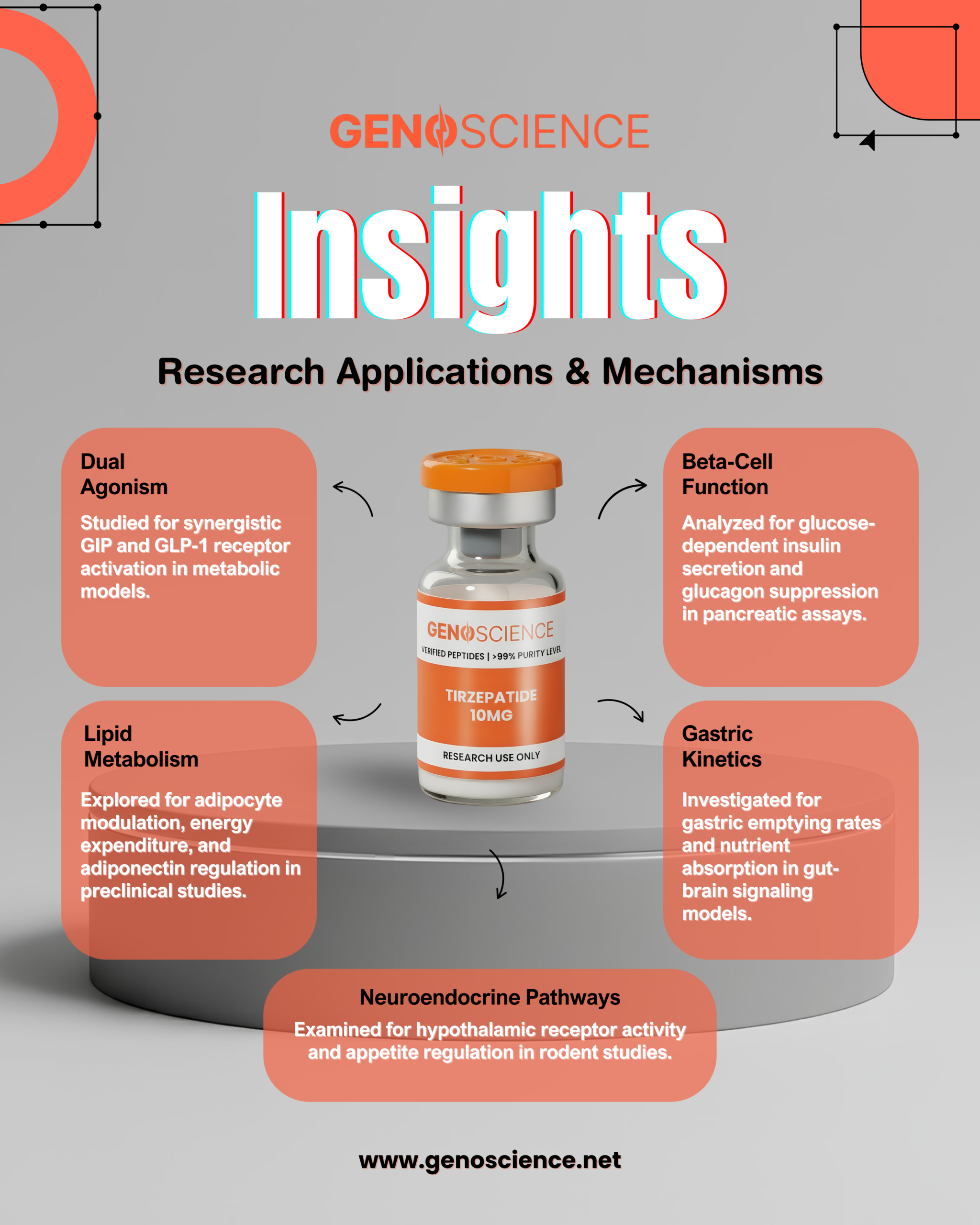
Tirzepatide is a reference compound in research on dual-receptor agonism. The two named receptors can be studied separately or within comparative models designed to evaluate how a single ligand interacts with more than one receptor target.
Researchers use binding experiments and functional assays to distinguish GIPR activity from GLP-1R activity. The dual-agonist classification describes receptor coverage, not an assumption that the compound produces identical responses at both receptors.
GIPR recognizes glucose-dependent insulinotropic polypeptide and belongs to the family of receptors involved in peptide hormone signaling. Laboratory studies frequently characterize GIPR activity by measuring intracellular cAMP.
Tirzepatide has been studied for its engagement of GIPR relative to native GIP and other reference ligands. Comparisons of receptor affinity and functional response help describe the pharmacological properties of the peptide in defined assay systems.
GLP-1R is a separate receptor target, often studied with native GLP-1 or a selective GLP-1R agonist as a reference. In receptor pharmacology, it is important to distinguish binding affinity from functional activity.
Research on tirzepatide has investigated its GLP-1R signaling behavior, including cAMP generation and beta-arrestin-related measurements. These readouts represent different aspects of receptor behavior and should be interpreted within the study that produced them.
A scientific topic associated with tirzepatide is biased agonism. This term describes a ligand that produces different relative signaling responses across pathways activated by the same receptor.
Research has examined tirzepatide-induced cAMP signaling, beta-arrestin recruitment and receptor internalization. Differences between these endpoints are useful for understanding ligand–receptor interactions at a molecular level.
Tirzepatide contains a fatty diacid side chain that influences its interaction with albumin. Albumin binding is an established topic in the broader study of acylated peptide analogs.
Researchers may account for albumin in the experimental environment when comparing the apparent potency of modified peptides with native ligands. Results from assays containing albumin may differ from those obtained under albumin-free conditions.
Tirzepatide provides a dual-receptor comparison point between selective GLP-1R ligands such as semaglutide and triple-receptor research ligands that additionally engage GCGR.
These comparisons are commonly used to explore receptor selectivity, structural design and the relationship between receptor occupancy and measured signaling. Meaningful interpretation depends on the reference peptide, cell line, assay method and receptor expression.
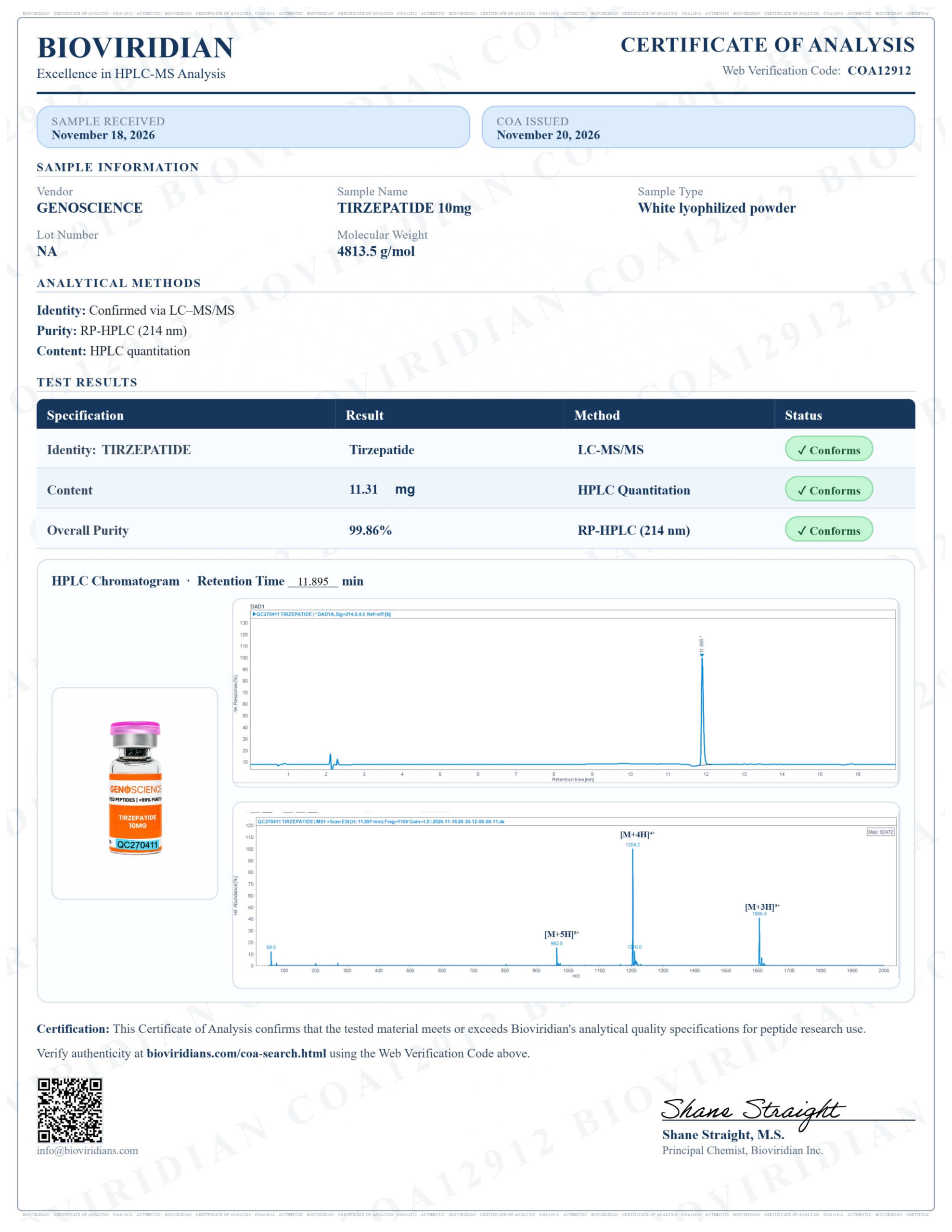
Certificates of Analysis (COAs) are posted on the product page when available. To request documentation for a specific lot, contact the Genoscience team with the lot number.
Keep unopened lyophilized research material at −20 °C in a dry environment away from light and moisture. Allow the sealed vial to reach room temperature before opening to reduce condensation.
Handle using standard laboratory protective equipment and established research-facility procedures.
Research Use Only: This product is intended strictly for laboratory research and development.
Not for Human or Veterinary Use: Not intended for human consumption, administration or veterinary applications.
Not an Approved Medicine: This material is not marketed as an FDA-approved drug or treatment.
Research Limitations: Laboratory receptor measurements do not establish clinical properties, safety or efficacy for the supplied research product.
Tirzepatide is a synthetic 39-amino-acid peptide with activity at the GIP receptor and the GLP-1 receptor. It is discussed in research on dual incretin-receptor pharmacology.
Semaglutide is a selective GLP-1 receptor agonist. Tirzepatide engages both GIPR and GLP-1R, which makes it a dual-receptor comparison compound in laboratory research.
The Genoscience product includes 10mg, 20mg and 30mg options supplied as lyophilized research material. Select the required option on the product page.
It means one molecular ligand has activity at two named receptor targets. In tirzepatide research, those targets are GIPR and GLP-1R.
It is a structural modification of tirzepatide studied in relation to albumin interaction and peptide design. The side chain distinguishes tirzepatide from its native peptide references.
When available, the COA for Tirzepatide 10mg / 20mg / 30mg can be found on the product page. You may also contact Genoscience to request a COA or ask about documentation availability for a specific lot.
No. Genoscience sells this tirzepatide product strictly for laboratory research purposes. It is not intended for human or veterinary use.
$135.00 Original price was: $135.00.$110.00Current price is: $110.00. / month
$150.00 Original price was: $150.00.$110.00Current price is: $110.00. / month
$250.00 Original price was: $250.00.$160.00Current price is: $160.00. / month
$130.00 Original price was: $130.00.$100.00Current price is: $100.00. / month
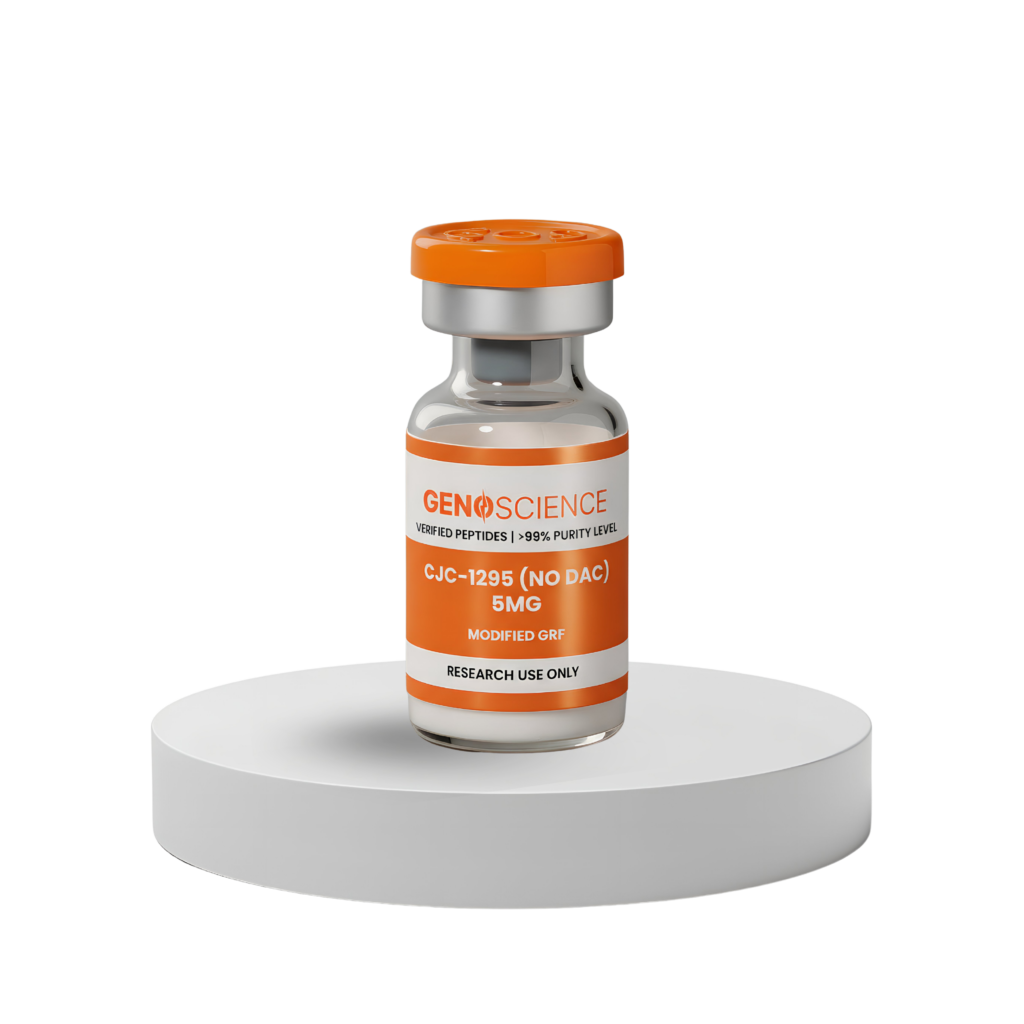
$400.00 Original price was: $400.00.$250.00Current price is: $250.00. / month
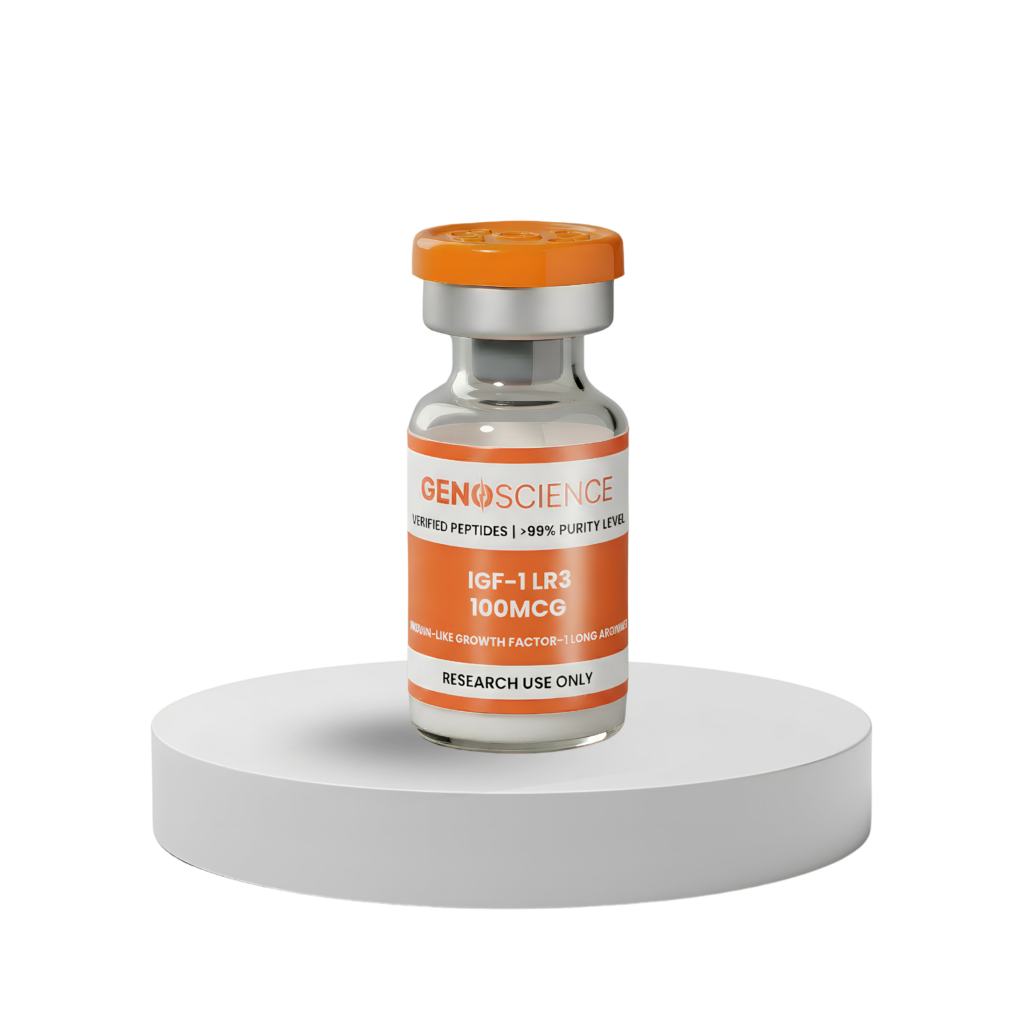
$450.00 Original price was: $450.00.$190.00Current price is: $190.00. / month
You must be at least 21 years old to enter Genoscience and review products intended for laboratory research use only.
Products are not for human or veterinary use, not for use in diagnostic procedures, and have not been evaluated by the U.S. Food and Drug Administration.