

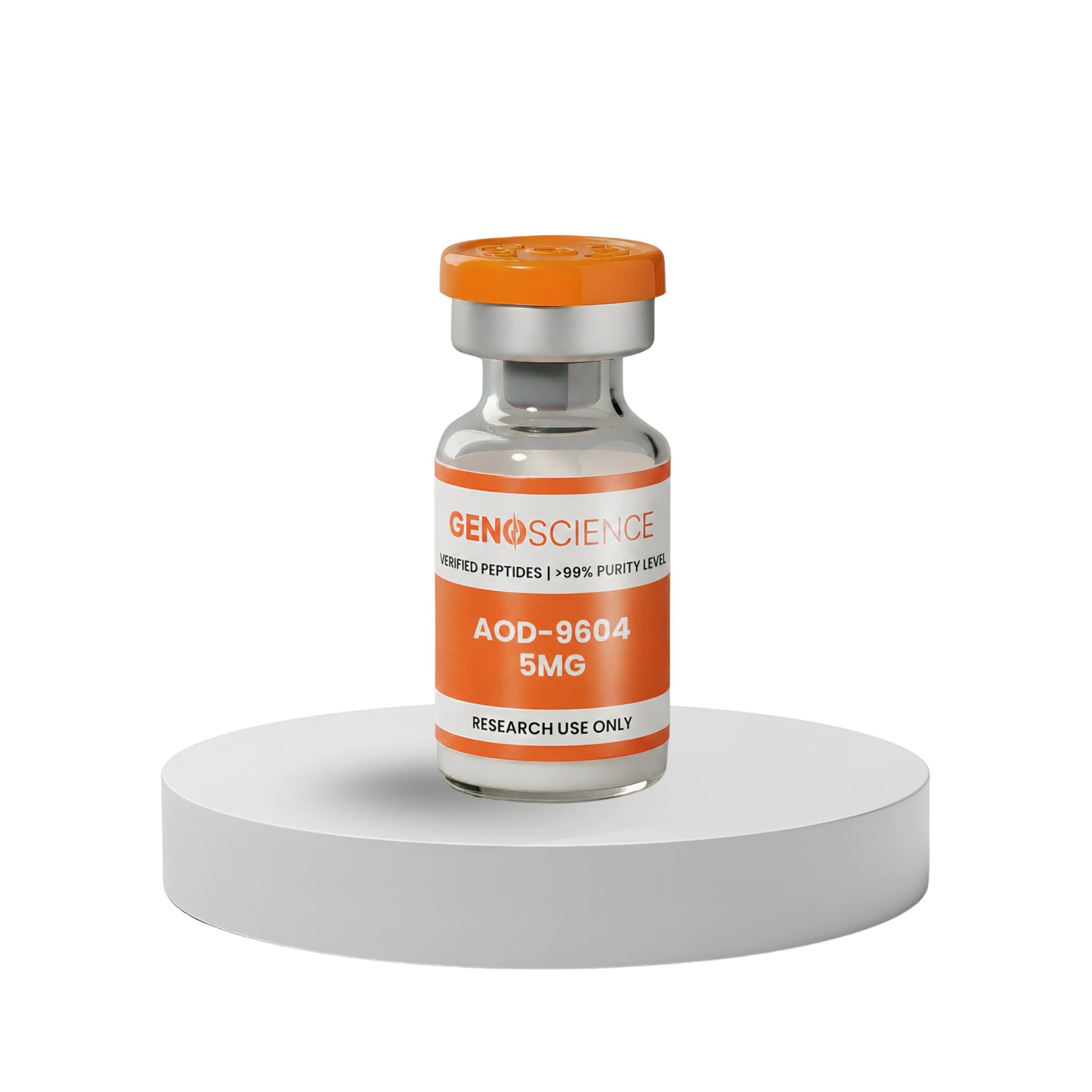


AOD-9604 15mg Monthly Subscription

Original price was: $150.00.Current price is: $110.00. / month

Subscription of 3 vials for a total of 15mg is now $110

Compound: AOD-9604 (Tyr-hGH 177–191 Fragment)
Concentration: 5mg per vial
Format: Lyophilized Powder
Chemical Classification: Synthetic Human Growth Hormone C-Terminal Fragment / Hexadecapeptide

Chemical Profile: AOD-9604 is a synthetic 16-amino-acid peptide derived from the C-terminal region of human growth hormone (hGH). Structurally, it consists of the hGH 177–191 sequence with an additional tyrosine residue at the N-terminus and contains an intramolecular disulfide linkage between its two cysteine residues. The peptide was developed to isolate specific molecular activity associated with the C-terminal region of hGH while separating those pathways from the broader receptor-mediated growth signaling of the intact hormone. Experimental research has examined AOD-9604 in lipid-metabolism, adrenergic-signaling, peptide-structure, and metabolic enzyme models.

  • Sequence: Tyr-Leu-Arg-Ile-Val-Gln-Cys-Arg-Ser-Val-Glu-Gly-Ser-Cys-Gly-Phe (YLRIVQCRSVEGSCGF)
  • Mechanism: hGH C-terminal peptide fragment investigated for modulation of lipid-metabolism and adrenergic-associated signaling pathways
  • Molecular Weight: ~1,815.1 g/mol


Description

Research Applications & Mechanisms:

  1. Lipid Metabolism & Lipolytic Signaling
    AOD-9604 has been investigated in experimental models examining molecular pathways involved in lipid mobilization and metabolic signaling. Research involving the C-terminal region of hGH has evaluated changes in lipolytic activity, providing a framework for studying how defined peptide fragments influence lipid-associated biochemical pathways independently of the complete hGH molecule.
  2. β3-Adrenergic Receptor Pathway Research
    Published experimental studies have examined AOD-9604 in relation to β3-adrenergic receptor signaling and expression. These models provide researchers with an opportunity to study interactions between peptide-mediated signaling and adrenergic-associated molecular pathways, including transcriptional changes involving β3-adrenergic receptor RNA.
  3. Lipid Oxidation & Metabolic Enzyme Models
    AOD-9604 is relevant to controlled laboratory research examining molecular mechanisms associated with lipid oxidation and metabolic enzyme activity. Experimental systems may evaluate changes in biochemical markers, enzyme-associated signaling, substrate utilization, and related metabolic pathways following peptide exposure.
  4. Growth-Signaling Separation Research
    A central area of interest surrounding AOD-9604 is the distinction between the molecular activity of a defined hGH C-terminal fragment and the broader signaling profile of full-length growth hormone. Comparative research can examine whether specific fragment-associated responses occur independently of canonical GH receptor and IGF-associated signaling, helping characterize structure-specific biological activity.
  5. Peptide Structure & Fragment Activity Research
    Because AOD-9604 represents a defined portion of the hGH sequence with an additional N-terminal tyrosine and intramolecular disulfide structure, it serves as a useful reagent for structure-activity studies. Researchers may compare AOD-9604 with full-length hGH or related C-terminal fragments to evaluate how peptide length, residue composition, disulfide configuration, and terminal modifications influence measurable molecular activity.

Important Notices:

  • Research Use Only: This product is sold strictly for scientific research, analytical testing, and laboratory development purposes.
  • Handling: The product is supplied as a lyophilized powder and should be handled using appropriate laboratory protocols for peptide stability, solubility, contamination control, and analytical preparation.
  • Visuals: Vial appearance and cap color may vary from product photos; the label quantity refers to the total active content inside the vial.

Important Legal & Safety Notice: All compounds discussed are intended for in-vitro research and analytical use only. They are not approved for human or animal consumption. Researchers are solely responsible for ensuring their handling, reconstitution, and storage protocols meet all applicable institutional, ethical, and legal standards.

 

More products