
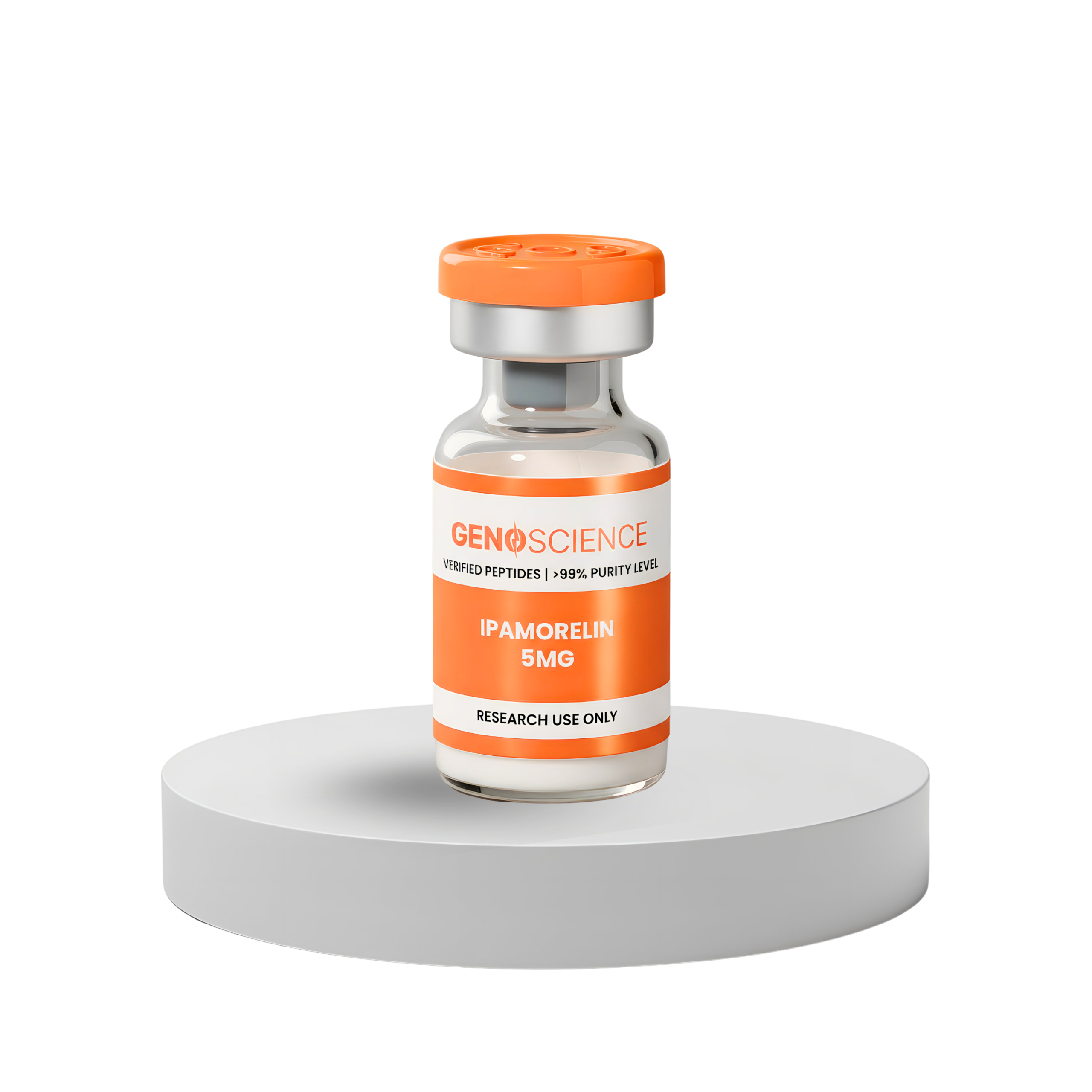
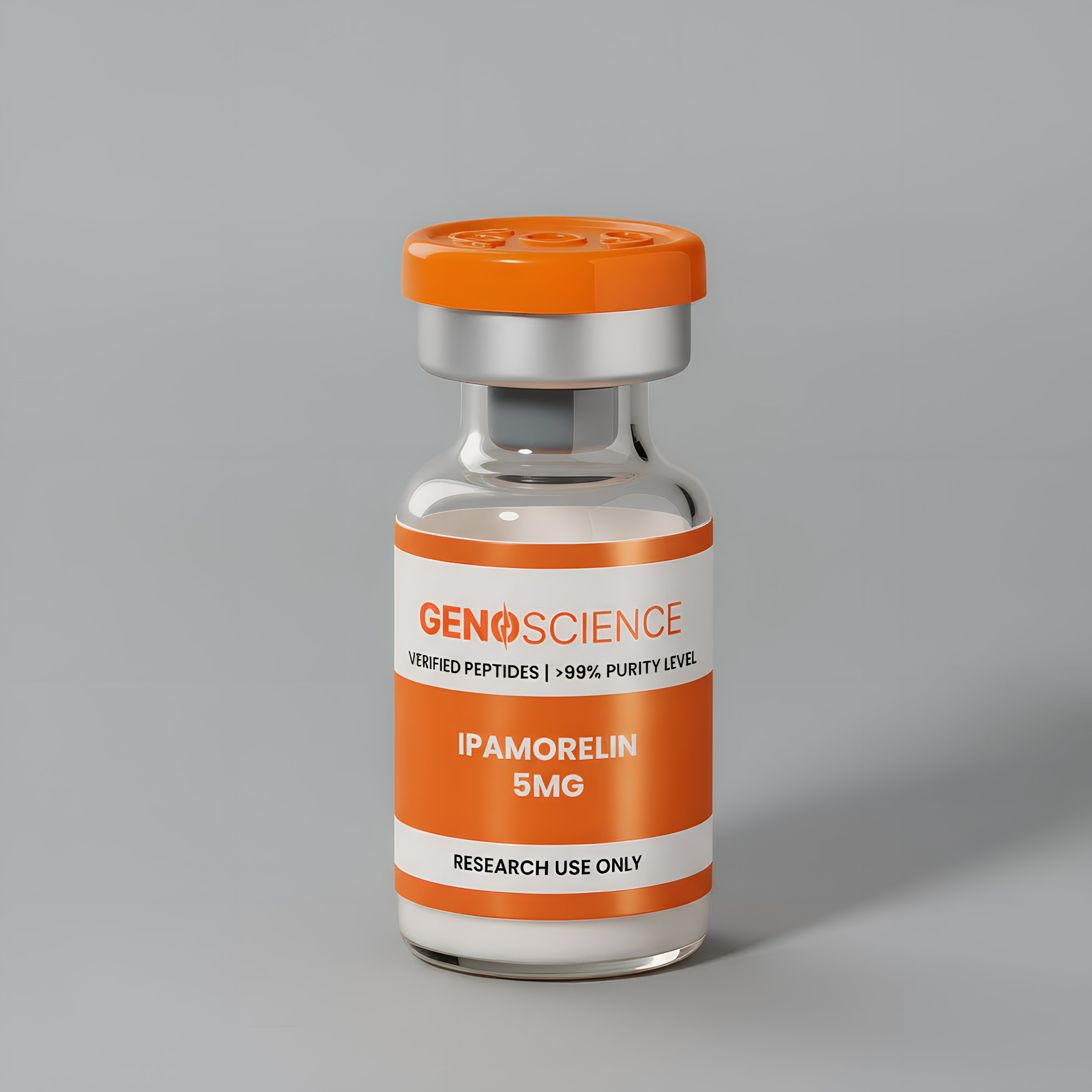

Compound: Ipamorelin (Growth Hormone Secretagogue Receptor Agonist)
Amount: 5mg per vial
Format: Lyophilized Powder
Chemical Classification: Synthetic Pentapeptide
Research Target: Growth Hormone Secretagogue Receptor (GHSR-1a), also known as the ghrelin receptor
Chemical Profile: Ipamorelin is a synthetic five-amino-acid peptide studied for its interaction with the growth hormone secretagogue receptor. Its sequence includes nonstandard amino-acid residues and distinguishes it from naturally occurring ghrelin and growth hormone-releasing hormone (GHRH). Ipamorelin is used as a reference ligand in research on receptor selectivity, pituitary signaling and peptide structure–activity relationships.
Research Use Only. Not for human or veterinary use.
Ipamorelin is a synthetic pentapeptide belonging to the growth hormone secretagogue peptide family. Its primary research target is the growth hormone secretagogue receptor, commonly abbreviated GHSR-1a and also called the ghrelin receptor.
Unlike growth hormone-releasing hormone (GHRH) analogs, ipamorelin belongs to a class of compounds investigated through a separate receptor pathway. Its five-residue composition makes it structurally distinct from longer GHRH-derived peptides.
Ipamorelin was characterized in the 1990s in a series of experiments comparing synthetic growth hormone secretagogues. Its receptor-associated pharmacology and selectivity became important topics in the scientific literature.
| Specification | Details |
|---|---|
| Compound | Ipamorelin |
| Classification | Synthetic Pentapeptide |
| Amino-Acid Length | 5 Residues |
| Receptor Target | GHSR-1a (Ghrelin Receptor) |
| CAS Number | 170851-70-4 |
| Molecular Formula | C38H49N9O5 |
| Molecular Weight | Approximately 711.9 g/mol |
| Product Form | Lyophilized Powder |
| Amount | 5mg per Vial |
| Intended Purpose | Laboratory Research Only |
Aib-His-D-2Nal-D-Phe-Lys-NH2
The sequence includes aminoisobutyric acid (Aib) and D-amino-acid residues. These structural features are characteristic of the defined synthetic peptide and are relevant when distinguishing ipamorelin from other growth hormone secretagogues.
Ipamorelin is classified by its interaction with GHSR-1a. CJC-1295 No DAC (Modified GRF 1-29), by comparison, is a GHRH receptor analog. Although both appear in research involving pituitary signaling, they are chemically and pharmacologically distinct.
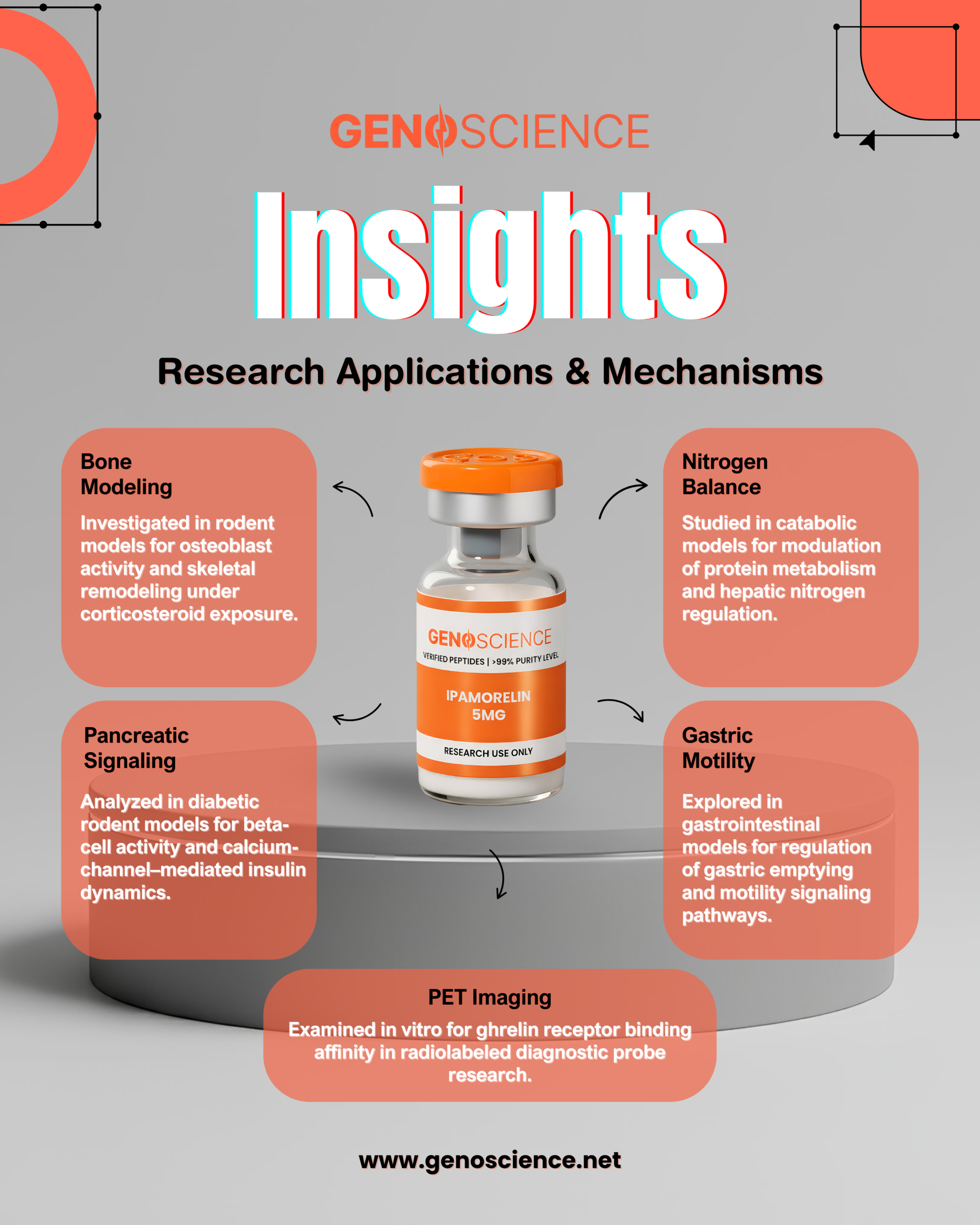
Ipamorelin is investigated as a ligand of the growth hormone secretagogue receptor (GHSR-1a). This receptor is part of the G-protein-coupled receptor family and is involved in neuroendocrine signaling research.
Laboratory investigations of GHSR ligands include receptor recognition, agonist activity and downstream signaling pathways. These questions are addressed using cell-based assays and other defined experimental systems.
The identification of GHSR as a receptor for synthetic secretagogues was an important development in understanding how these compounds interact with the pituitary and hypothalamic signaling systems.
A notable feature of early ipamorelin research was its comparison with earlier compounds in the growth hormone-releasing peptide family, including GHRP-2 and GHRP-6.
An original pharmacology study characterized ipamorelin as a relatively selective growth hormone secretagogue in the experimental models examined. The researchers measured hormone-related responses to distinguish compounds within the same broad class.
Selectivity describes the results of particular experiments and should not be confused with a clinical safety claim about the supplied research material.
Ipamorelin’s five-amino-acid structure is relevant to studies of how synthetic peptide modifications influence receptor interactions.
The presence of Aib and D-amino-acid residues illustrates how peptides may be modified from common naturally occurring amino-acid patterns. Structure–activity research compares such modifications across related compounds and examines changes in measurable receptor responses.
A short sequence does not make every pentapeptide pharmacologically equivalent. The amino-acid identities, stereochemistry and terminal modifications contribute to the identity of each research compound.
Studies of growth hormone secretagogues often compare synthetic peptides that share a receptor family but differ in molecular structure. GHRP-6, GHRP-2 and ipamorelin are examples discussed in the early development of this research area.
Experimental endpoints may include receptor signaling, peptide potency and selectivity across measured biological markers. Comparisons are meaningful when the same experimental conditions and appropriate reference compounds are used.
Ipamorelin and Modified GRF (1-29) are sometimes discussed together because they are associated with two different receptor systems involved in pituitary signaling.
This distinction is useful in comparative receptor research. It does not establish a combined effect of the two compounds.
Certificates of Analysis (COAs) are posted on the product page when available. To request documentation for a specific lot, contact the Genoscience team with the lot number.
Store unopened lyophilized research material at −20 °C in a dry environment, protected from light and moisture. Allow the sealed vial to reach room temperature before opening to reduce condensation.
Handle using suitable laboratory protective equipment and standard research-facility procedures.
Research Use Only: This product is intended strictly for laboratory research and development.
Not for Human or Veterinary Use: Not intended for human consumption, administration or veterinary applications.
Not an Approved Medicine: This material is not marketed as an FDA-approved drug or treatment.
Research Limitations: Results from laboratory assays and preclinical investigations do not establish clinical safety or efficacy for this research product.
Ipamorelin is a synthetic five-amino-acid peptide studied as a ligand of the growth hormone secretagogue receptor, also known as the ghrelin receptor.
Ipamorelin is associated with the growth hormone secretagogue receptor GHSR-1a. This differs from the growth hormone-releasing hormone receptor studied with GHRH analogs.
Genoscience supplies Ipamorelin 5mg as lyophilized research material in a vial containing 5mg of the compound.
Both are discussed in research on growth hormone secretagogues, but they have distinct peptide structures and showed different selectivity profiles in early pharmacology studies.
They are associated with different receptor pathways. Ipamorelin is a GHSR ligand, while Modified GRF (1-29) is a GHRH receptor analog. This distinction is relevant to comparative receptor research.
When available, the COA for Ipamorelin 5mg can be found on the product page. You may also contact Genoscience to request a COA or ask about documentation availability for a specific lot.
No. Genoscience sells Ipamorelin 5mg strictly for laboratory research purposes. It is not intended for human or veterinary use.
$120.00 Original price was: $120.00.$100.00Current price is: $100.00. / month
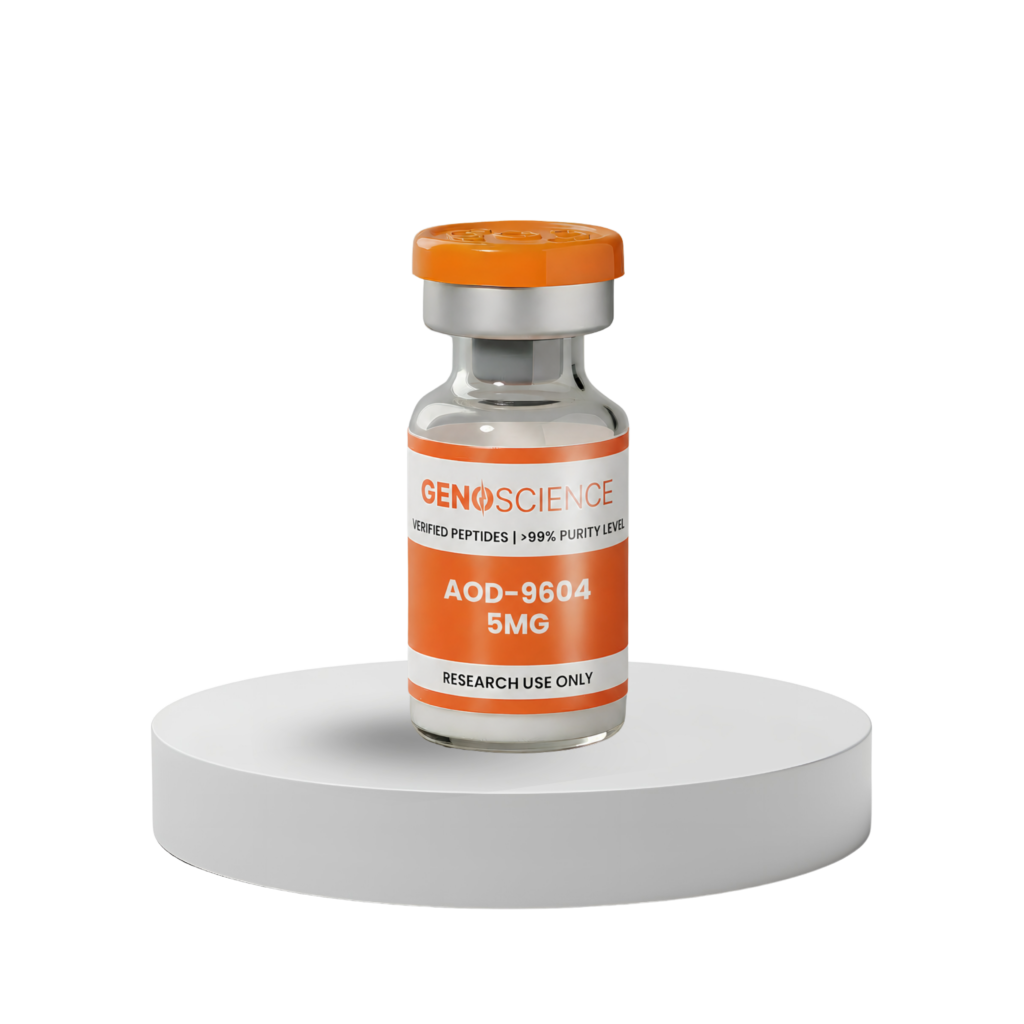
$150.00 Original price was: $150.00.$110.00Current price is: $110.00. / month
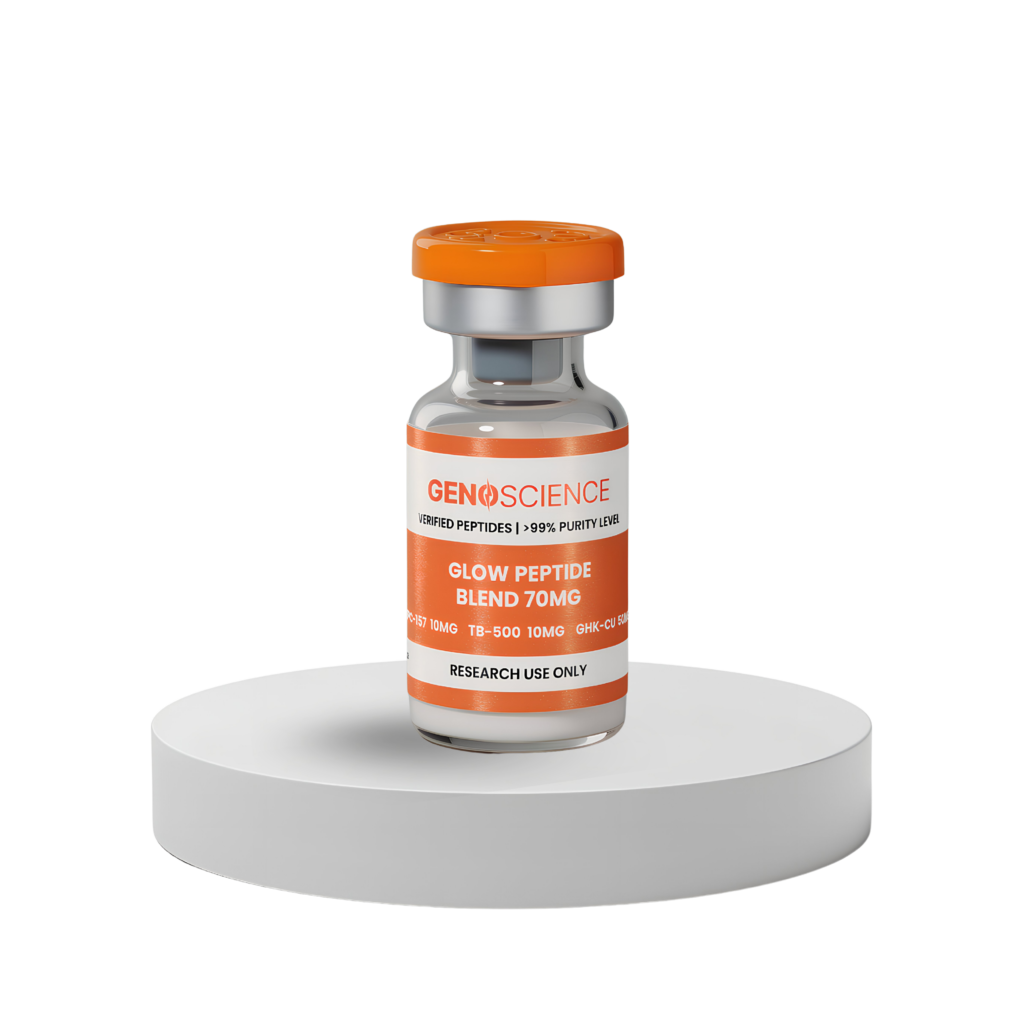
$300.00 Original price was: $300.00.$180.00Current price is: $180.00. / month
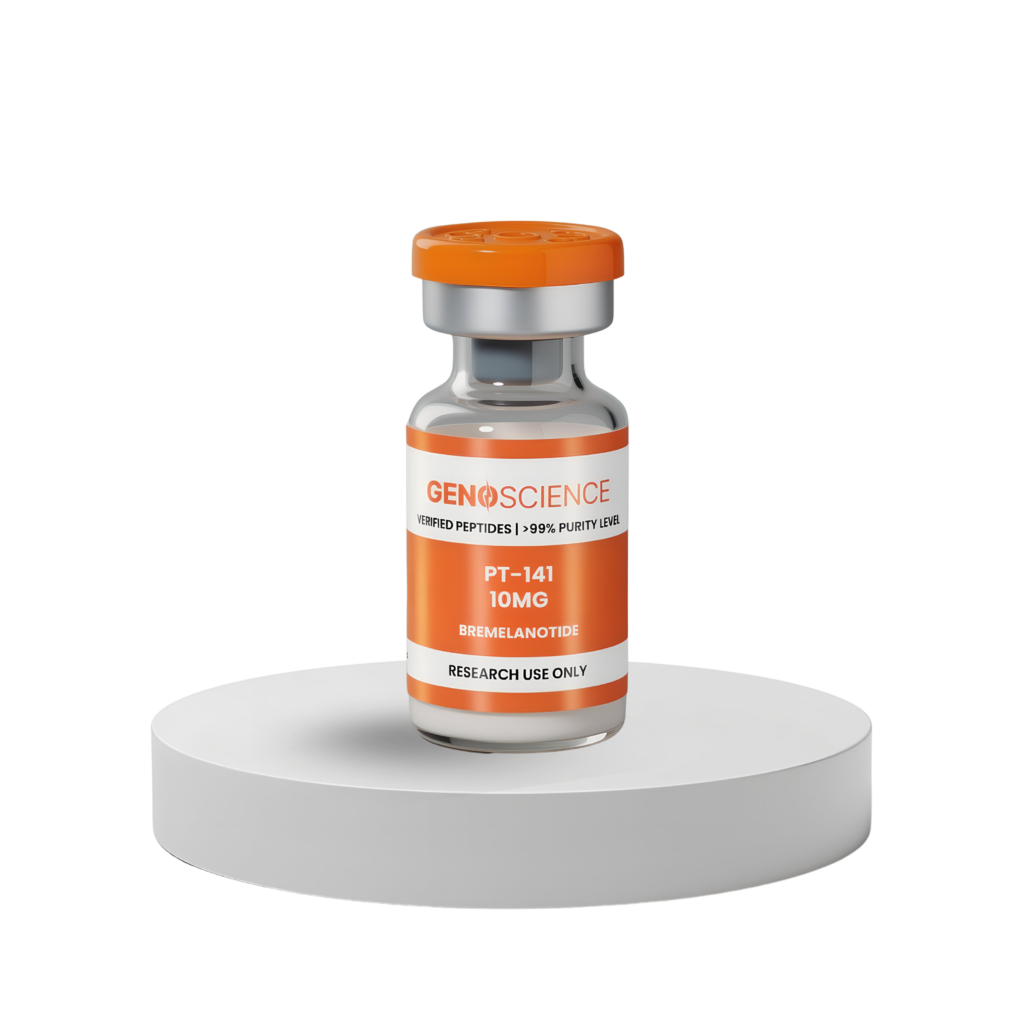
$260.00 Original price was: $260.00.$150.00Current price is: $150.00. / month
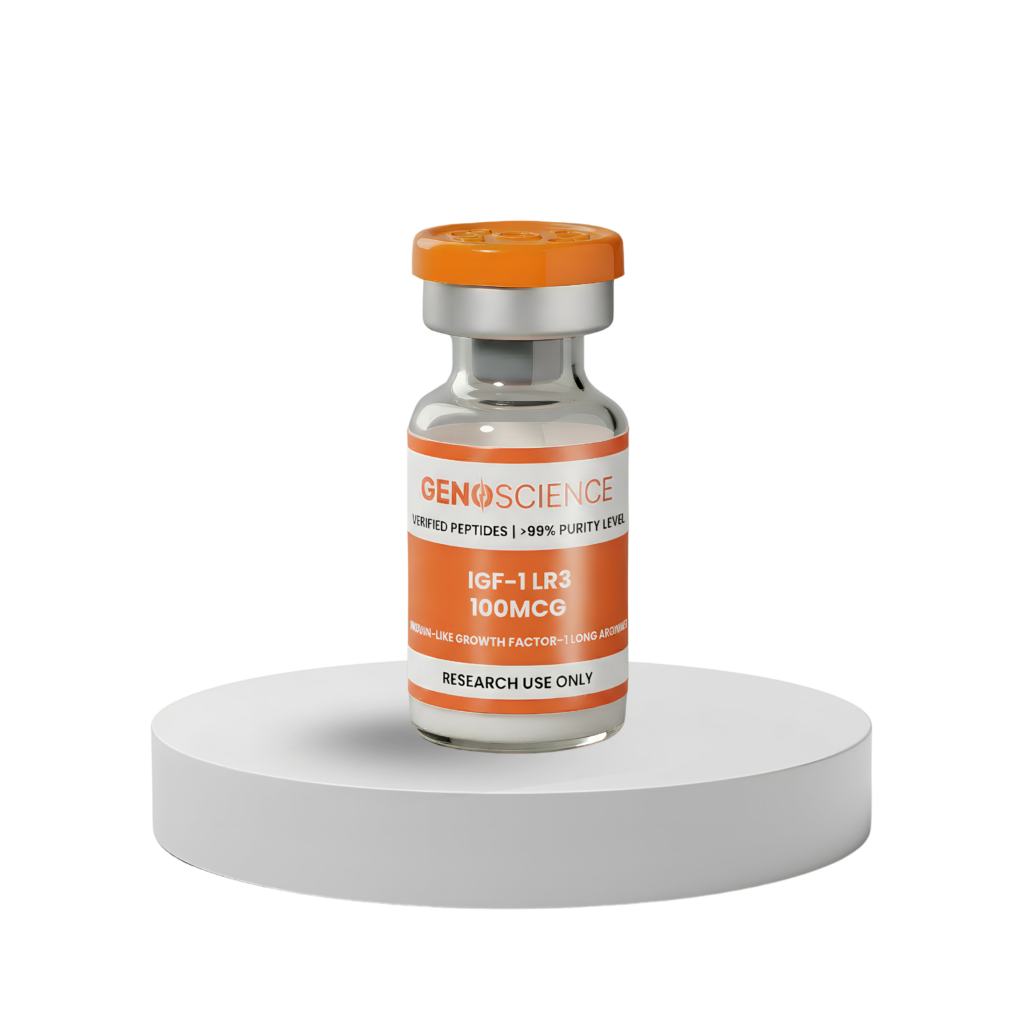
$450.00 Original price was: $450.00.$275.00Current price is: $275.00. / month
$220.00 Original price was: $220.00.$180.00Current price is: $180.00. / month
You must be at least 21 years old to enter Genoscience and review products intended for laboratory research use only.
Products are not for human or veterinary use, not for use in diagnostic procedures, and have not been evaluated by the U.S. Food and Drug Administration.