

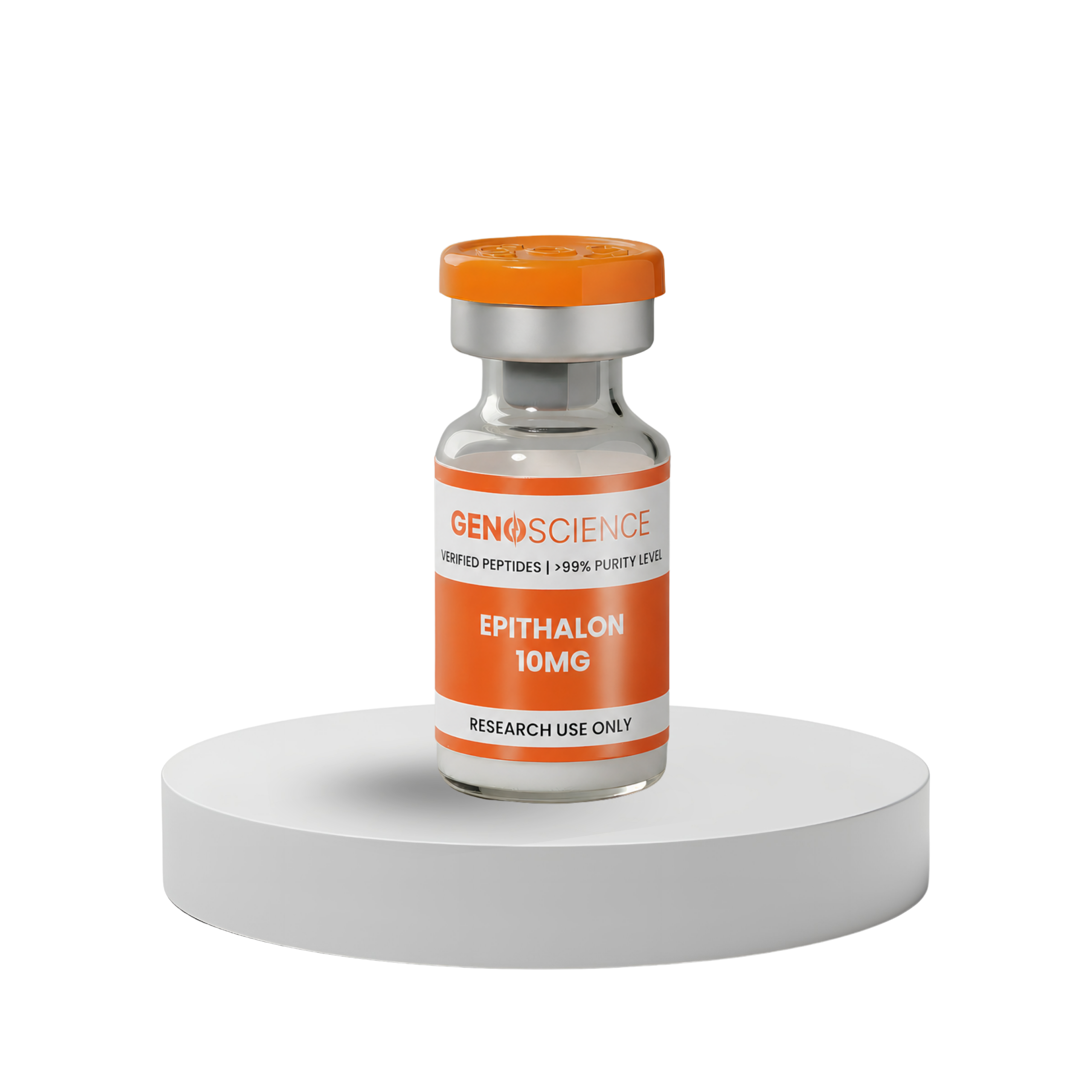


Epithalon 30mg Monthly Subscription

Original price was: $135.00.Current price is: $110.00. / month

Subscription of 3 vials for a total of 30mg is now $110.

Compound: Epithalon (Epitalon / AEDG Tetrapeptide)
Concentration: 10mg per vial
Format: Lyophilized Powder
Chemical Classification: Synthetic Tetrapeptide / Peptide Bioregulator

Chemical Profile: Epithalon, also known as Epitalon, is a synthetic tetrapeptide composed of the amino-acid sequence Ala-Glu-Asp-Gly (AEDG). Its compact four-residue structure has made it a subject of laboratory investigation in studies involving telomerase-associated signaling, gene-expression regulation, oxidative processes, and cellular proliferation. Published experimental research has examined Epithalon in cultured fibroblast systems, where changes in telomerase catalytic-subunit expression, enzymatic activity, and telomere dynamics have been reported. Because of its defined sequence and low molecular weight, Epithalon provides researchers with a relatively simple molecular probe for studying short-peptide interactions with cellular regulatory pathways.

  • Sequence: Ala-Glu-Asp-Gly (AEDG)
  • Mechanism: Investigated as a short peptide modulator of gene-expression and telomerase-associated cellular pathways
  • Molecular Weight: ~390.35 g/mol


Description

Research Applications & Mechanisms:

  1. Telomerase Activity & Telomere Biology
    Epithalon has been investigated in cultured fibroblast systems for its relationship with telomerase-associated processes. Published in-vitro experiments have reported changes in expression of the telomerase catalytic subunit, measurable telomerase activity, and telomere length following peptide exposure. These findings make AEDG a useful research compound for examining molecular mechanisms associated with telomere regulation under controlled cellular conditions.
  2. Cellular Replication & Proliferative Models
    Short-peptide research involving Epithalon has explored changes in cellular proliferative behavior over successive passages. Laboratory models can use the peptide to investigate relationships among telomere dynamics, replicative capacity, cell-cycle progression, and molecular markers associated with cellular senescence.
  3. Gene-Expression Regulation
    Epithalon has been studied as part of a broader class of short peptide bioregulators associated with transcriptional changes. Controlled cell-based assays may examine how the AEDG sequence influences gene-expression profiles, transcriptional machinery, regulatory proteins, and downstream molecular signaling pathways.
  4. Oxidative & Cellular Stress Research
    Experimental literature has explored Epithalon in models involving oxidative balance and cellular stress responses. Researchers may utilize the peptide to examine changes in antioxidant-associated enzymes, oxidative biomarkers, macromolecular stability, and cellular signaling responses under defined laboratory stress conditions.
  5. Pineal-Associated Molecular Signaling
    Epithalon was developed from research involving peptide sequences associated with pineal-derived peptide preparations. Subsequent experimental work has investigated its relationship with molecular pathways connected to pineal signaling and regulatory gene expression. This provides a framework for studying how small peptide sequences may influence transcriptional and enzymatic activity in appropriate experimental systems.

Important Notices:

  • Research Use Only: This product is sold strictly for scientific research, analytical testing, and laboratory development purposes.
  • Handling: The product is supplied as a lyophilized powder and should be handled using appropriate laboratory protocols for peptide stability, solubility, contamination control, and analytical preparation.
  • Visuals: Vial appearance and cap color may vary from product photos; the label quantity refers to the total active content inside the vial.


Important Legal & Safety Notice: All compounds discussed are intended for in-vitro research and analytical use only. They are not approved for human or animal consumption. Researchers are solely responsible for ensuring their handling, reconstitution, and storage protocols meet all applicable institutional, ethical, and legal standards.

More products