

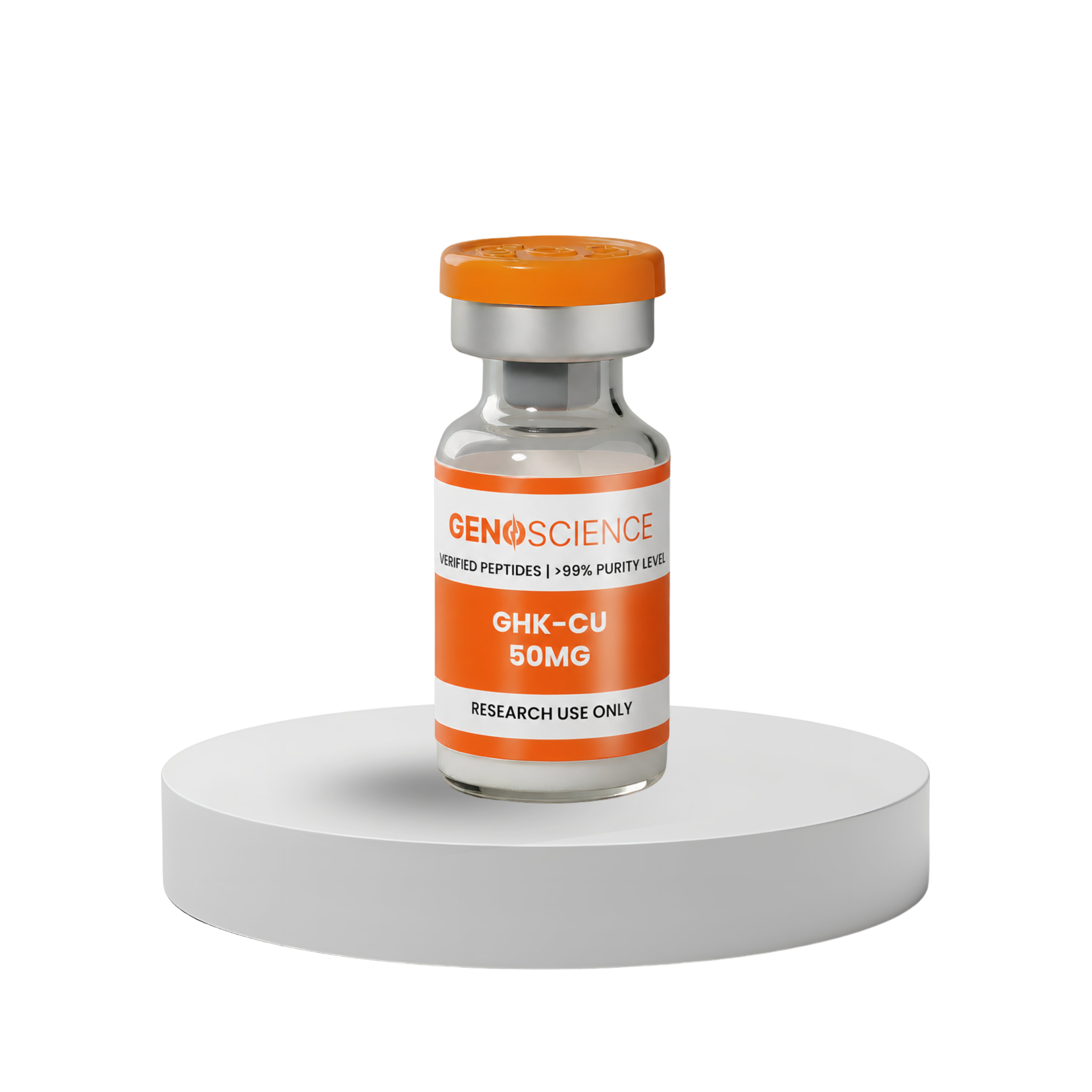


GHK-Cu 150mg Monthly Subscription

Original price was: $120.00.Current price is: $100.00. / month

Subscription of 3 vials for a total of 150mg is now $100.

Compound: GHK-Cu (Copper Tripeptide / Gly-His-Lys-Cu²⁺ Complex)
Concentration: 50mg per vial
Format: Lyophilized Powder
Chemical Classification: Copper-Binding Tripeptide / Peptide-Metal Coordination Complex

Chemical Profile: GHK-Cu is a copper-binding complex formed between the tripeptide Glycyl-L-Histidyl-L-Lysine (GHK) and copper ions. The GHK sequence contains functional groups capable of coordinating Cu²⁺, producing a defined peptide-metal complex that has been extensively investigated in cultured-cell and biochemical systems. Experimental research has examined GHK-Cu in relation to extracellular matrix synthesis, matrix metalloproteinase regulation, glycosaminoglycan production, fibroblast-associated signaling, and copper-dependent molecular pathways. Its combination of a short peptide scaffold with transition-metal coordination makes GHK-Cu a useful molecular probe for studying peptide-metal interactions and extracellular matrix remodeling under controlled laboratory conditions.

  • Sequence: Gly-His-Lys (GHK), coordinated with Cu²⁺
  • Mechanism: Copper-binding tripeptide complex investigated for modulation of extracellular matrix-associated gene expression, metalloproteinase activity, and copper-dependent cellular signaling
  • Molecular Weight: ~401.9 g/mol for a 1:1 GHK-Cu complex representation


Description

Research Applications & Mechanisms:

  1. Extracellular Matrix & Collagen Synthesis Research
    GHK-Cu has been investigated extensively in cultured fibroblast systems examining extracellular matrix production. In-vitro studies have reported changes in collagen synthesis following exposure to the copper-tripeptide complex, making GHK-Cu a relevant reagent for studying matrix-associated biosynthetic pathways and fibroblast-mediated extracellular matrix regulation.
  2. Matrix Metalloproteinase & TIMP Regulation
    Experimental fibroblast studies have examined GHK-Cu in relation to matrix metalloproteinase-2 (MMP-2) expression. Research has reported increased MMP-2 mRNA and extracellular MMP-2 levels alongside changes in tissue inhibitors of metalloproteinases, including TIMP-1 and TIMP-2. These findings support the use of GHK-Cu in controlled studies of extracellular matrix turnover and protease-inhibitor balance.
  3. Glycosaminoglycan Biosynthesis
    GHK-Cu has also been evaluated in cultured fibroblast models examining glycosaminoglycan synthesis. Experimental findings have identified changes involving extracellular dermatan sulfate and cell-associated heparan sulfate, providing a framework for studying how peptide-copper complexes influence non-collagen extracellular matrix components.
  4. Fibroblast Signaling & Growth-Factor Expression
    Cell-culture research has examined GHK-Cu-associated changes in fibroblast proliferation and growth-factor expression. Measured molecular endpoints have included basic fibroblast growth factor (bFGF), vascular endothelial growth factor (VEGF), and other signaling mediators. These systems allow researchers to investigate how copper-binding peptides influence transcriptional and secretory responses in isolated fibroblast models.
  5. Copper Coordination & Peptide-Metal Interaction Research
    GHK displays strong affinity for copper ions, making GHK-Cu useful for studying peptide-metal coordination chemistry. Analytical and biochemical research may examine copper binding, complex stability, ligand exchange, structural configuration, and the relationship between metal coordination and downstream molecular activity.

Important Notices:

  • Research Use Only: This product is sold strictly for scientific research, analytical testing, and laboratory development purposes.
  • Handling: The product is supplied as a lyophilized powder and should be handled using appropriate laboratory protocols for peptide stability, metal-complex integrity, solubility, contamination control, and analytical preparation.
  • Visuals: Vial appearance and cap color may vary from product photos; the label quantity refers to the total active content inside the vial.

Important Legal & Safety Notice: All compounds discussed are intended for in-vitro research and analytical use only. They are not approved for human or animal consumption. Researchers are solely responsible for ensuring their handling, reconstitution, and storage protocols meet all applicable institutional, ethical, and legal standards.

 

More products