
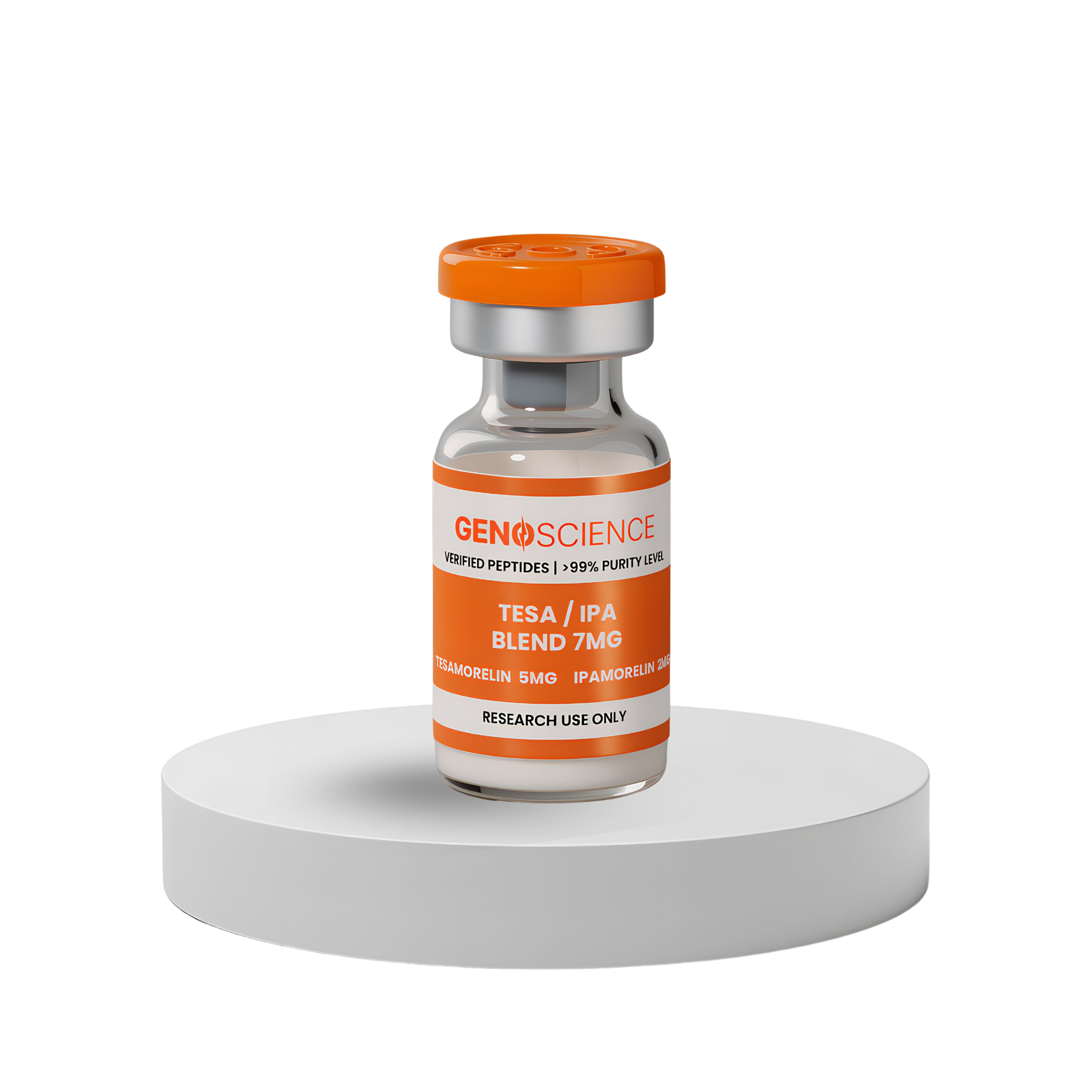
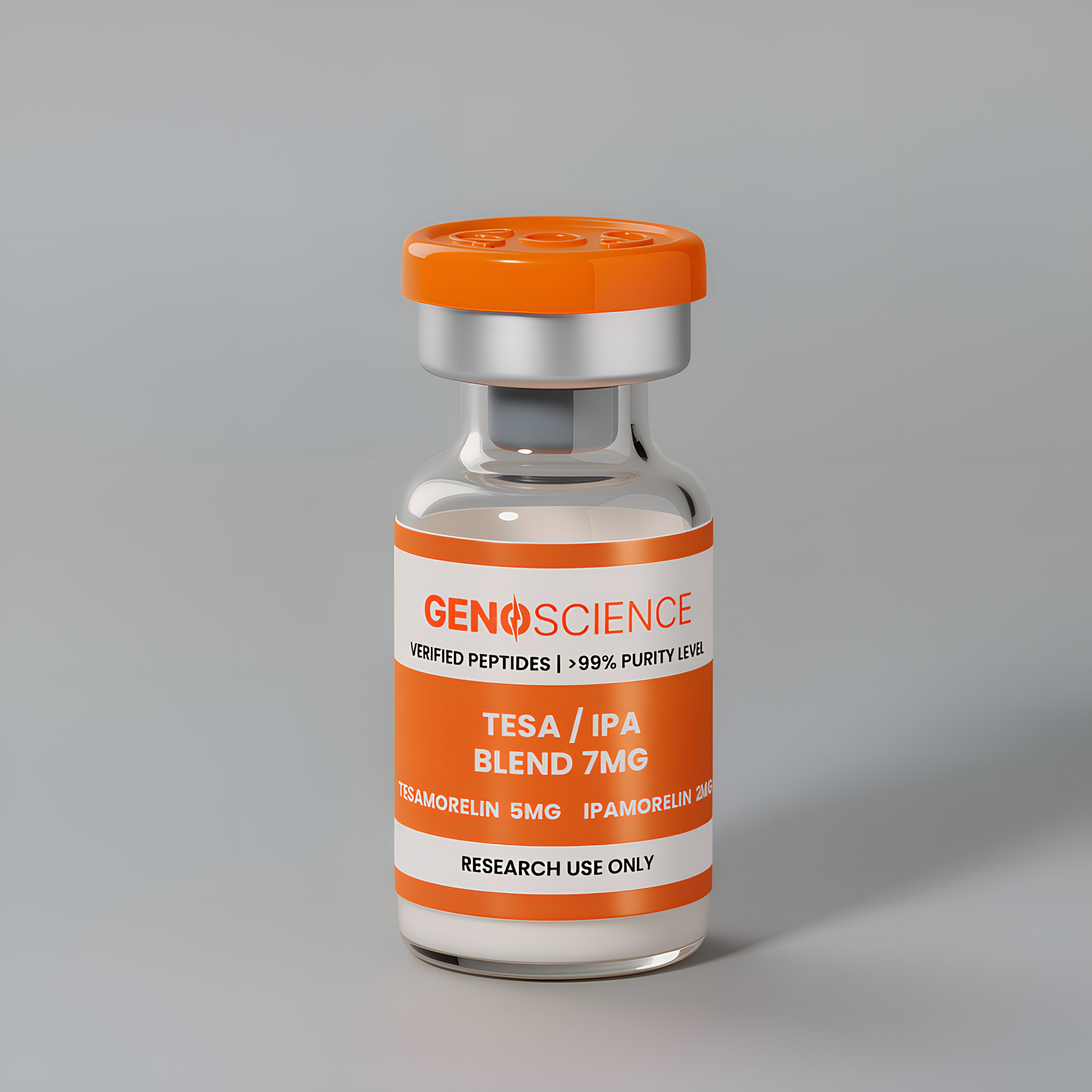


One vial 5 mg / 2 mg was $85 now $60
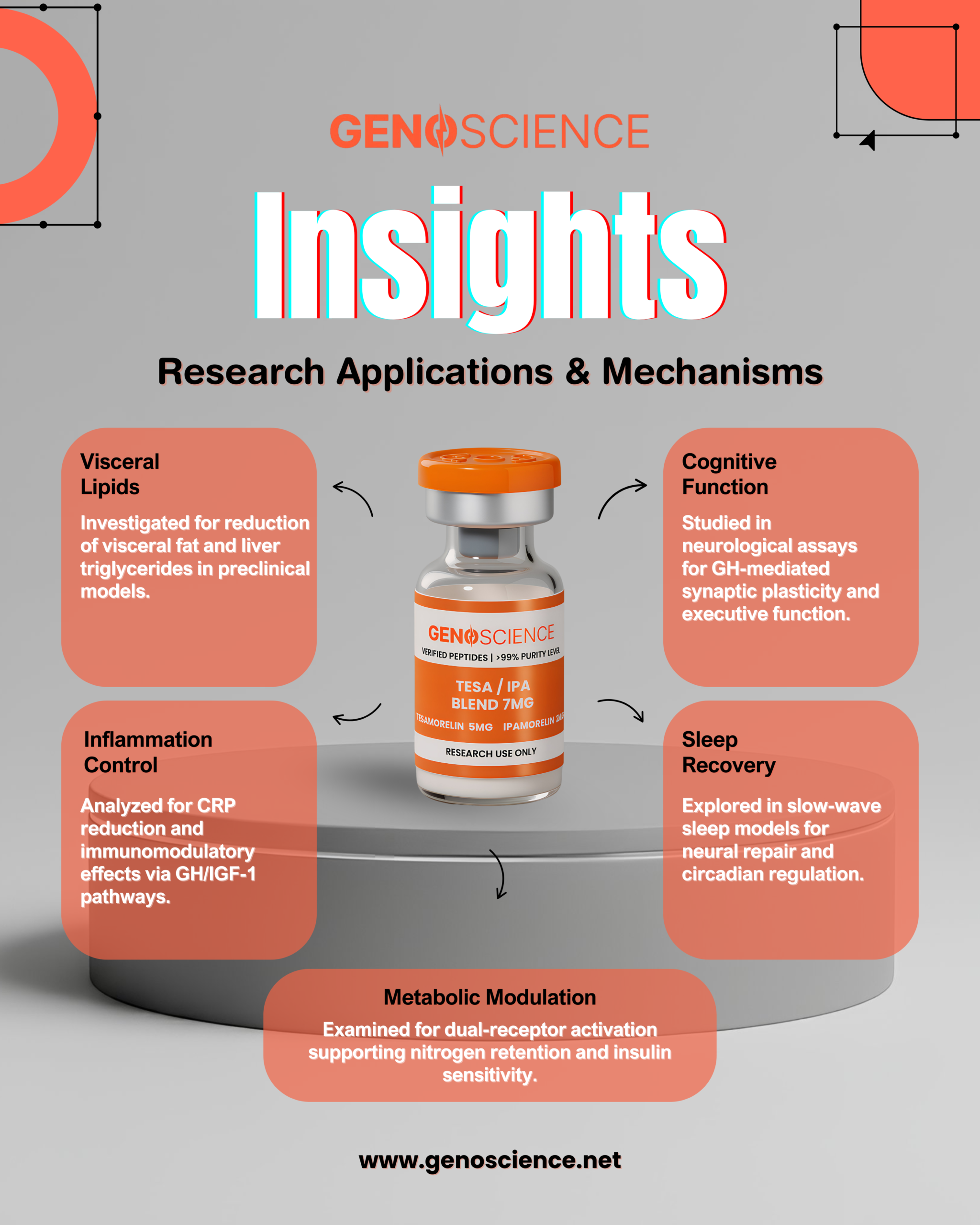
Compound: Tesamorelin / Ipamorelin Peptide Blend
Amount: 7mg total peptide content per vial
Format: Lyophilized Powder
Chemical Classification: Two-Component Research Peptide Blend
Research Targets: Growth Hormone-Releasing Hormone Receptor (GHRHR) and Growth Hormone Secretagogue Receptor (GHSR-1a)
Chemical Profile: This 7mg research blend combines two structurally distinct peptides, tesamorelin and ipamorelin, in one lyophilized vial. Tesamorelin is a 44-amino-acid GHRH analog, while ipamorelin is a five-residue growth hormone secretagogue. Their separate receptor targets provide a framework for studying GHRH and ghrelin-associated signaling pathways in laboratory models.
Research Use Only. Not for human or veterinary use.
This research blend contains two different synthetic peptides. Tesamorelin belongs to the growth hormone-releasing hormone (GHRH) analog family; ipamorelin belongs to the growth hormone secretagogue family. They are not variants of one another and do not share a single molecular formula.
The mixture is supplied as 7mg total lyophilized material per vial. Unlike a single-peptide product, the formulation is best described by identifying both ingredients separately and explaining the receptor pathway associated with each.
| Specification | Details |
|---|---|
| Compound | Tesamorelin / Ipamorelin Peptide Blend |
| Classification | Two-Component Research Blend |
| Components | Tesamorelin and Ipamorelin |
| Total Amount | 7mg per Vial |
| Form | Lyophilized Powder |
| Tesamorelin Length | 44 Amino Acids |
| Ipamorelin Length | 5 Amino Acids |
| Tesamorelin Research Target | GHRHR |
| Ipamorelin Research Target | GHSR-1a |
| Intended Use | Laboratory Research Only |
Tesamorelin: A synthetic GHRH(1–44) analog with an N-terminal trans-3-hexenoyl modification. Its main research context is receptor signaling through GHRHR.
Ipamorelin: A synthetic pentapeptide with the sequence Aib-His-D-2Nal-D-Phe-Lys-NH2. It is studied in connection with the ghrelin receptor, also known as GHSR-1a.
Tesamorelin and ipamorelin are also discussed independently in peptide-science research. Placing them in one product does not turn them into a new single peptide or establish a combined biological effect. Experimental findings on either ingredient should be distinguished from findings on the mixture itself.
Tesamorelin is a modified GHRH-related peptide used as a reference in research on the growth hormone-releasing hormone receptor (GHRHR). This receptor belongs to the G-protein-coupled receptor family and is discussed in pituitary signaling studies.
Biochemical research involving GHRH analogs examines how peptide structure influences receptor engagement and downstream signaling. The N-terminal modification of tesamorelin is part of its molecular design and distinguishes it from native GHRH.
Ipamorelin is studied as a ligand of GHSR-1a, the receptor commonly called the ghrelin receptor. Its short synthetic sequence differs substantially from the 44-residue tesamorelin structure.
Researchers investigate secretagogue peptides through receptor pharmacology and experimental hormone-signaling models. Early scientific work compared ipamorelin with other synthetic members of this peptide family, including GHRP-2 and GHRP-6.
The GHRH and ghrelin receptors represent different receptor pathways. Their ligands can be studied separately to examine receptor specificity, cell signaling and biochemical differences.
The blend provides a product format containing both compounds, while meaningful conclusions about joint activity would require direct studies using this exact mixture. Data from single-peptide experiments should not be presented as demonstrated outcomes for the blend.
Tesamorelin and ipamorelin illustrate two different approaches to peptide design. Tesamorelin modifies a longer endogenous hormone-related sequence; ipamorelin uses a shorter synthetic peptide scaffold that incorporates nonstandard residues.
Structure–activity research examines how such chemical differences relate to receptor engagement, enzyme susceptibility and the measured behavior of a peptide in an assay. These features are part of each compound’s molecular identity.
Research into endocrine receptor signaling frequently uses reference compounds to distinguish the response of one receptor system from another. Appropriate studies consider receptor-expression levels, assay readouts and the identity of the reference ligand.
Because the present product is a mixture, component-specific published literature is background information. Research on the exact combination is less extensive than the literature on its named individual components.
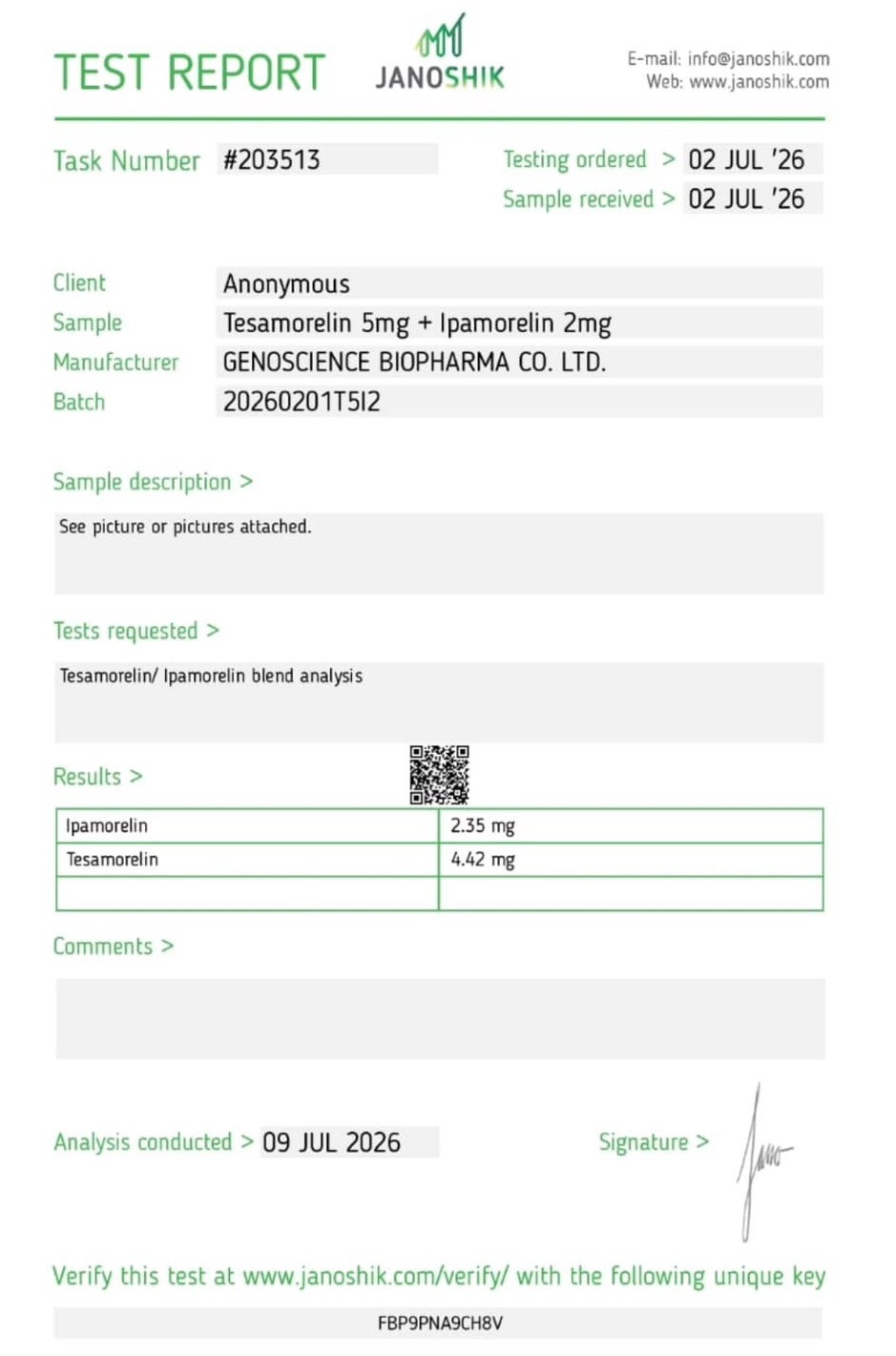
Certificates of Analysis (COAs) are posted on the product page when available. To request documentation for a specific lot, contact the Genoscience team with the lot number.
Store unopened lyophilized research material at −20 °C, protected from light, humidity and direct heat. Allow the sealed vial to reach room temperature before opening to reduce condensation.
Use appropriate laboratory protective equipment and established research-facility handling procedures.
Research Use Only: This product is intended strictly for laboratory research and development.
Not for Human or Veterinary Use: Not intended for human consumption, administration or veterinary applications.
Not an Approved Formulation: The Genoscience blend is not marketed as an FDA-approved pharmaceutical product.
Research Limitations: Research findings involving tesamorelin or ipamorelin separately do not establish the behavior, efficacy or safety of their combined formulation.
It is a two-component research blend containing tesamorelin and ipamorelin in one 7mg vial of lyophilized material.
Tesamorelin is a 44-amino-acid GHRH analog studied through the GHRH receptor. Ipamorelin is a synthetic pentapeptide studied through the growth hormone secretagogue or ghrelin receptor.
It contains two distinct peptides. The mixture does not have a single amino-acid sequence or a combined CAS number.
The two named pathways are GHRHR, associated with tesamorelin, and GHSR-1a, associated with ipamorelin.
Not automatically. Findings from experiments on individual peptides describe those materials under the tested conditions; the mixture would require direct study.
When available, the COA for Tesamorelin / Ipamorelin Peptide Blend 7mg can be found on the product page. You may also contact Genoscience to request a COA or ask about documentation availability for a specific lot.
No. Genoscience sells this blend strictly for laboratory research purposes. It is not intended for human or veterinary use.
$120.00 Original price was: $120.00.$100.00Current price is: $100.00. / month
$135.00 Original price was: $135.00.$110.00Current price is: $110.00. / month
$165.00 Original price was: $165.00.$130.00Current price is: $130.00. / month
$165.00 Original price was: $165.00.$130.00Current price is: $130.00. / month
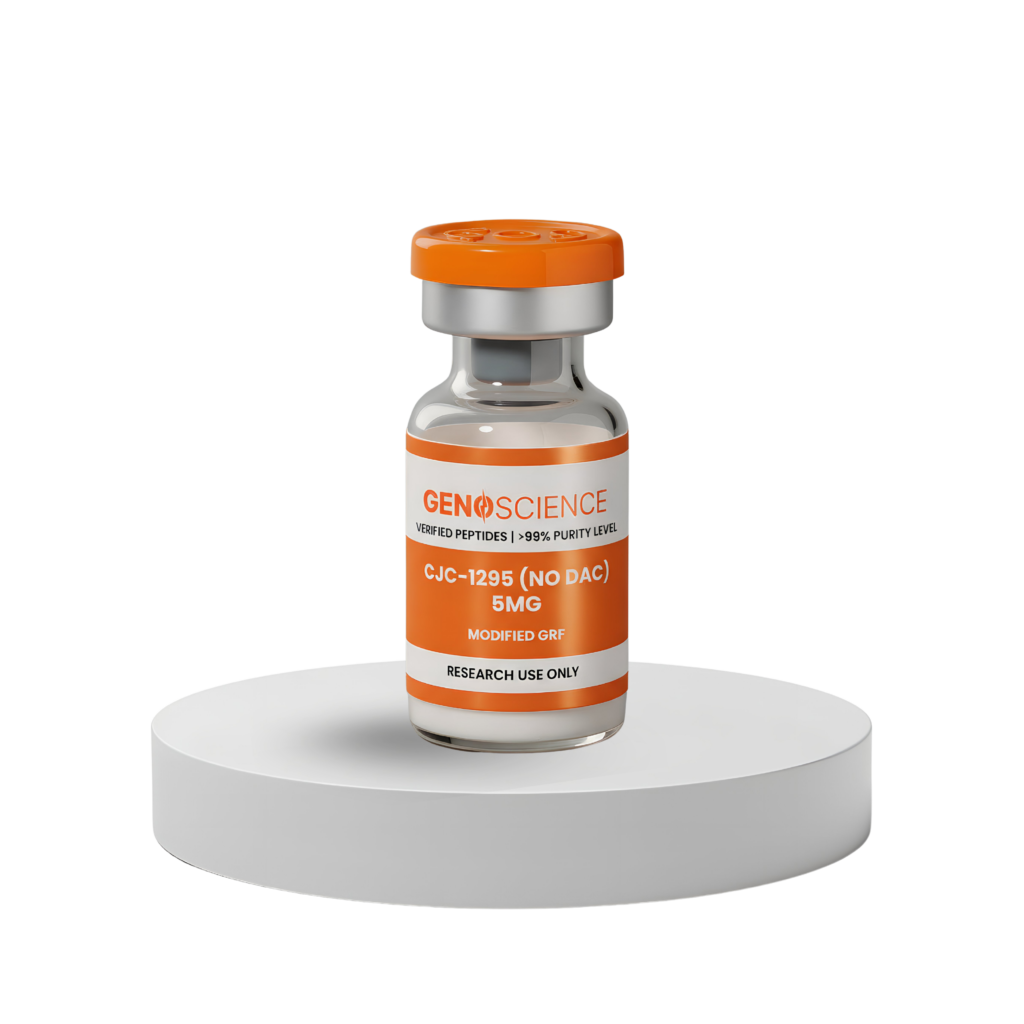
$400.00 Original price was: $400.00.$250.00Current price is: $250.00. / month
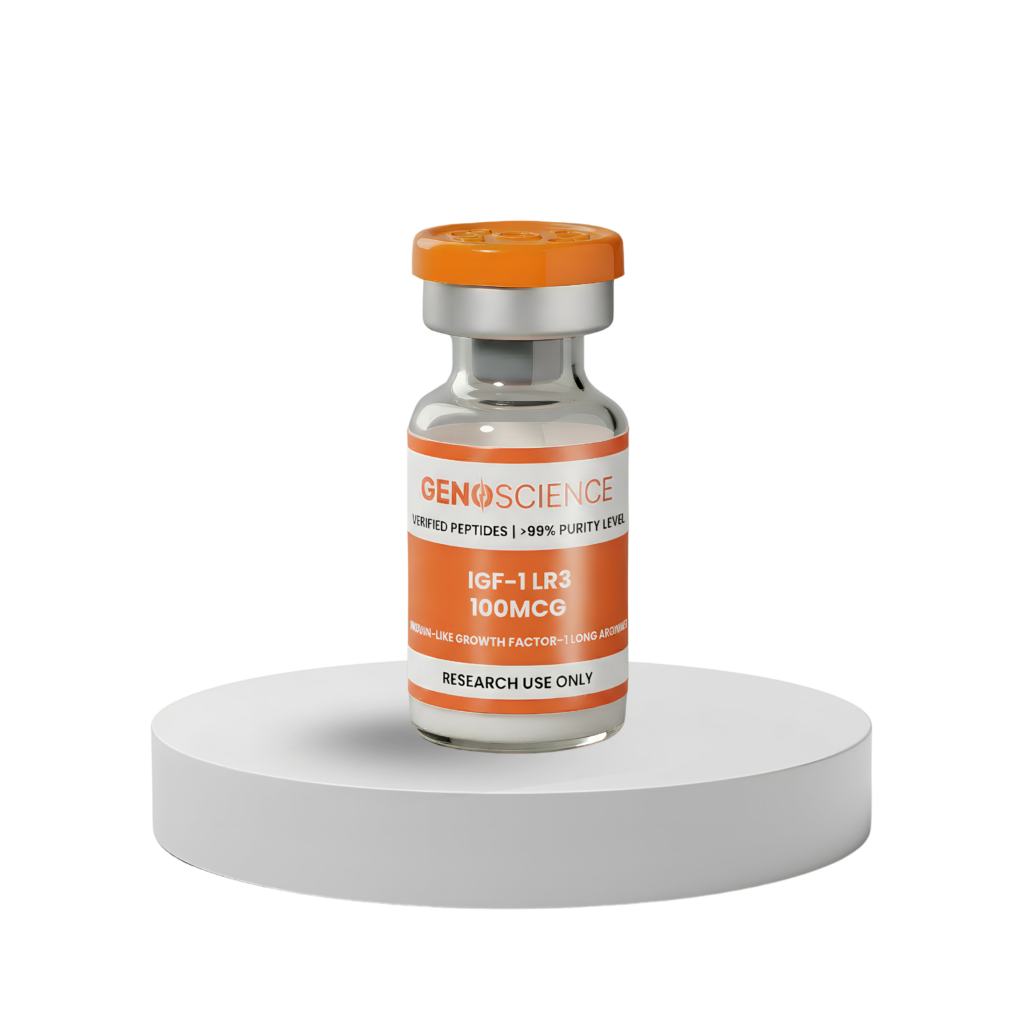
$450.00 Original price was: $450.00.$190.00Current price is: $190.00. / month
You must be at least 21 years old to enter Genoscience and review products intended for laboratory research use only.
Products are not for human or veterinary use, not for use in diagnostic procedures, and have not been evaluated by the U.S. Food and Drug Administration.